BJJ Etiquette for Beginners: How to Be a Great Training Partner
A practical guide to hygiene, drilling, live-round communication, safety, and the
habits that make teammates want to train with you.
Brazilian Jiu Jitsu etiquette is not a collection of mysterious traditions you are expected to know
before arriving. Most of it comes down to three ideas: keep the training space clean,
communicate clearly, and help your partners practice safely. A beginner who follows those
principles is already becoming a valuable teammate.
Every academy has its own routines, so watch the coach and ask when you are uncertain.
Nobody expects perfection in your first class. They do expect consideration.
Arrive early enough to settle in
For your first visit, arrive ten to fifteen minutes early. That gives you time to sign in, change,
meet the coach, explain any injuries, and learn where shoes and personal items belong. Rushing
onto the mat after instruction begins creates avoidable stress.
If you are late, wait at the edge of the mat until the coach acknowledges you. Some academies
want late students to check in before joining; others will wave you into the warm-up. Follow the
room rather than guessing.
Good etiquette is not about looking experienced. It is about
making the room safer, cleaner, and easier for everyone to learn
in.
Keep shoes and bare feet in the right places
BJJ is normally practiced barefoot, and outdoor shoes should never touch the mat. At the same
time, bare feet should not walk through restrooms, parking lots, or other dirty areas and then
return to training.
Bring slides or sandals and wear them whenever you step off the mat. Place them where the
academy directs so walkways remain clear. This small habit protects everyone who trains after
you.
Clean gear is part of being a good partner
Wear freshly washed training clothes to every session. A Gi, rash guard, shorts, spats, and any
washable brace should be cleaned after each use and dried fully. Do not reuse gear because it
seems only slightly sweaty.
Shower regularly, use deodorant, and trim fingernails and toenails short and smooth. Remove
jewelry and cover or remove anything with a hard edge. If you have an open wound, unusual
rash, or possible contagious skin condition, stay off the mat and speak with the academy before
returning
Listen while the coach demonstrates
When instruction begins, sit or stand where you can see without blocking others. Keep side
conversations quiet and save unrelated questions until after the demonstration. Coaches often
show a technique in layers; talking through the first step may cause you to miss the safety detail
in the second.
Ask concise questions about the movement being taught. If you need a larger explanation, the
coach can address it during drilling. Trying the technique usually answers questions that are
difficult to solve while only watching.
Be a cooperative drilling partner
Drilling is not a hidden competition. The partner receiving the technique should provide the
resistance requested by the coach – often little or none during the first repetitions. The student
practicing should move with control and reset efficiently so both people receive equal time.
- Take turns at the pace the coach assigns rather than taking five repetitions while your partner
gets one. - Give realistic reactions only after both partners understand the movement.
- Do not add surprise submissions, counters, or extra pressure to prove the technique would not
work. - If something hurts or feels unsafe, say so immediately and adjust.
How to choose and approach a training partner
Introduce yourself and ask politely if someone needs a partner. If the coach pairs students,
accept the pairing unless there is a safety or personal boundary concern. Beginners often benefit
from experienced partners who can maintain a controlled pace.
It is acceptable to decline a round. You do not owe a detailed explanation. A simple ‘I’m going to
sit this one out’ or ‘I need a different partner today’ is enough. Tell the coach privately if a
pattern of unsafe behavior is involved.
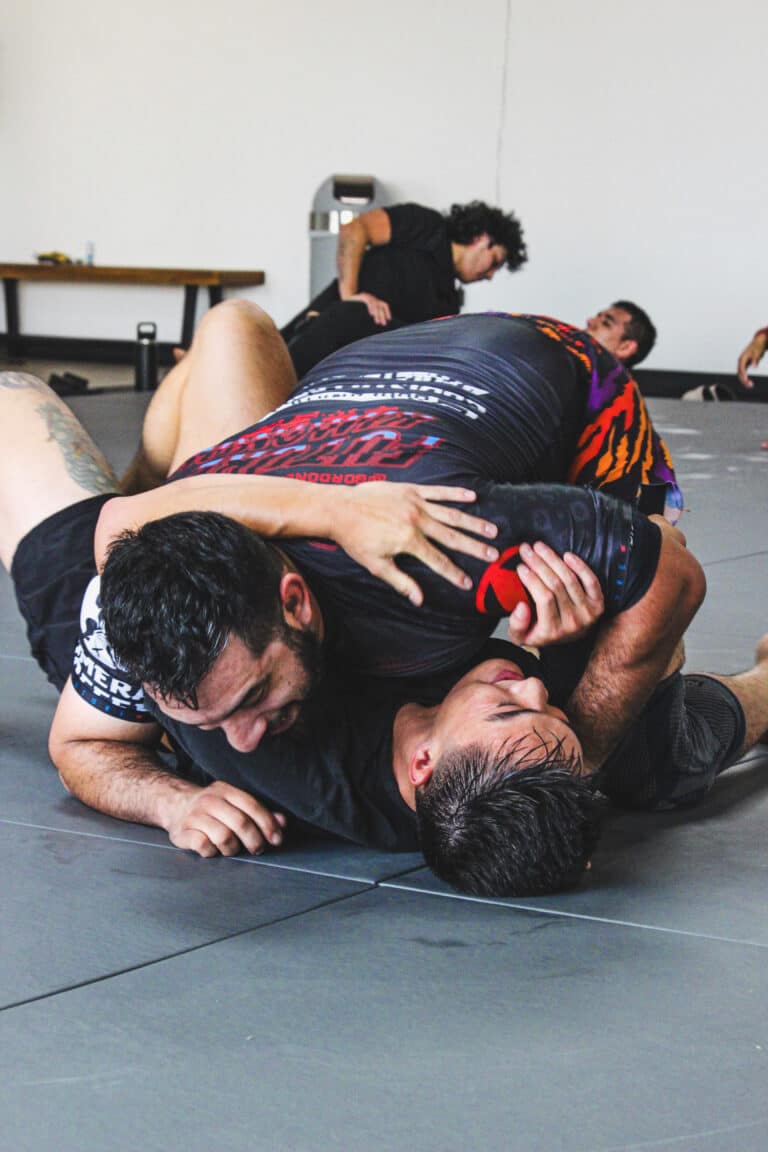
Agree on intensity before live training
Before a round, mention that you are new and ask for a controlled pace. Terms like light,
technical, or flow can mean different things to different people, so use specific language when
needed: ‘I’m working around a sore shoulder’ or ‘Can we keep submissions slow?’
Match your partner’s size, experience, and goals responsibly. A large strength difference requires
extra control. A smaller partner is not an invitation to prove that weight works, and a newer
partner is not a target for collecting submissions.
Tap early and respect every tap
Tap with your hand, foot, or voice when a submission is secured, a limb is trapped awkwardly, or
you need the exchange to stop. You do not need to wait for pain. Your partner must release
immediately.
Afterward, reset without celebrating or making excuses. If your partner taps, do not coach them
unless they ask or the instructor invites discussion. A respectful round can include many taps
without either person being diminished
Control matters more than winning
Beginners often move quickly because uncertainty feels urgent. Slow down. Avoid uncontrolled
falling, twisting individual fingers, grabbing inside sleeves or pant legs where prohibited, and
applying submissions faster than a partner can respond.
If you do not know whether a movement is legal or safe, pause and ask. The goal of live training
is to practice decision-making against resistance, not to win a private championship no one else
knew was happening.
Use coaching carefully
During a round, listen primarily to the academy’s coaches. Teammates may offer helpful advice,
but a beginner does not need five competing voices. After a round, ask one specific question
such as, ‘What should I protect earlier from side control?’
Avoid giving your partner an unsolicited seminar, especially if both of you are new. Share a brief
detail when asked, then return to training. The coach is responsible for the larger technical
picture
Respect the room between rounds
Stay aware of other pairs and move away from walls or crowded areas. If two groups are about to
collide, the pair with more experience or awareness should reset safely. Do not walk through
active rounds or sit where people may fall.
Keep water bottles and bags off the training surface unless the academy says otherwise. Clean
up tape, tissues, and personal items before leaving.
What to do after class
- Thank your partners and ask the coach any remaining short questions.
- Collect all personal items and follow the academy’s mat-cleaning routine if students
participate. - Place used clothing in a separate bag and wash it after the session.
- Tell the coach about an injury, unsafe exchange, or concern before going home.
The reputation you want to build
Skill takes time, but your reputation as a partner begins immediately. Students remember the
person who stays clean, moves with control, taps responsibly, and helps both people learn. Those
habits make experienced teammates happy to train with you.
You do not need to know every rule before your first class. Arrive prepared, pay attention,
communicate, and choose safety over ego. That is BJJ etiquette in its most useful form – and it is
enough to begin.
Try a beginner-friendly Brazilian Jiu Jitsu class at San Antonio Grappling Academy. Our
coaches will help you learn at your pace, answer your questions, and give
you a clear path forward. Contact the academy today to schedule your first
class.