Orthodox or Southpaw? How
Beginners Find the Right
Boxing Stance
Learn what each stance means, how coaches help beginners choose, and the
balance checks that create a dependable foundation.
One of the first questions in boxing is whether you should stand orthodox or southpaw. The terms
can sound like two different styles, but they simply describe which foot and hand are forward.
Orthodox boxers usually lead with the left side, while southpaw boxers usually lead with the
right.
Your stance should give you balance, movement, defense, and access to both hands. It is not a
personality test, and there is no universally better option. A coach can help you choose a starting
position, then refine it as your coordination develops.
What orthodox and southpaw mean
In an orthodox stance, the left foot and left hand are forward, while the stronger right hand is
typically positioned behind them. In a southpaw stance, the right foot and right hand lead, with
the left hand behind. The rear hand usually has more space to build power, while the lead hand
manages range and creates openings.
Many right-handed beginners start orthodox and many left-handed beginners start southpaw, but
handedness is only one factor. Balance, leg preference, previous sports, vision, and comfort can
influence the decision.
The best beginner stance is the one that lets you stay balanced,
follow instruction, and repeat good technique.
Why coaches usually start with your dominant hand
in back
Placing the dominant hand in the rear can make the cross feel natural and powerful. It also
leaves the lead hand available for the jab, which is used frequently and improves through
repetition. This traditional starting point works well for many students.
It is not an unbreakable law. Some athletes prefer their dominant side forward for a stronger jab,
lead hook, or better coordination. Beginners should resist changing stance every few minutes,
however. Consistency gives the coach a stable base to evaluate.
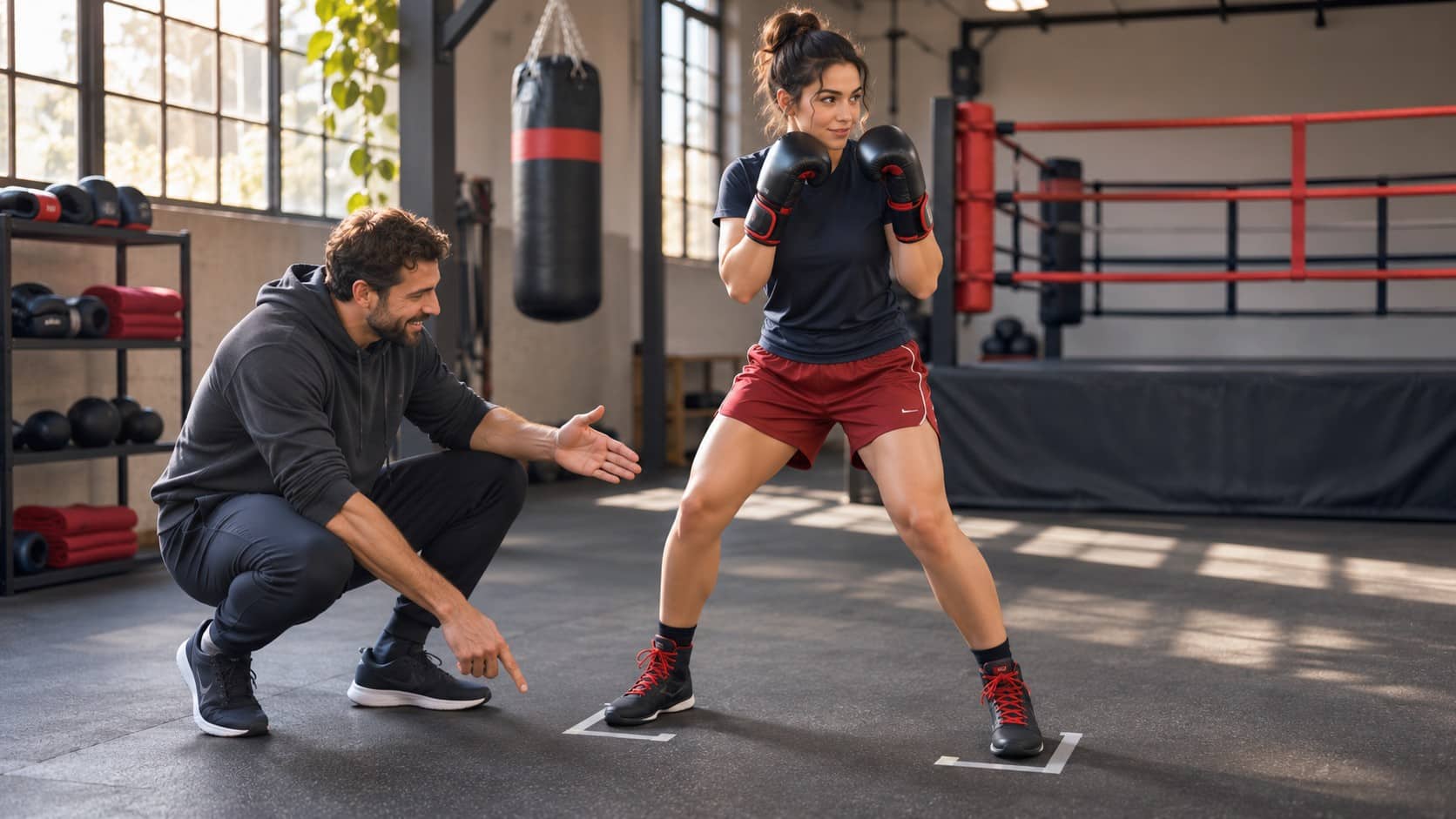
How to find a balanced starting stance
Stand naturally, then place one foot a comfortable step behind the other. Keep some width
between the feet instead of arranging them on a tightrope. The knees stay soft, the rear heel
remains light, and the weight is balanced enough that you can move in any direction.
Your chest should not face completely sideways or square directly toward the target. The exact
angle depends on your body and the coach’s system. The practical test is simple: can you jab,
throw a rear straight, step, and return to guard without tipping or crossing your feet?
Five signs the stance is working
- You can take a small step forward, backward, left, or right without bringing the feet together.
- Your head stays between your feet instead of leaning far over the lead knee.
- The rear heel can turn when the rear hand punches.
- Your hands return to guard without the shoulders becoming rigid.
- You can stop immediately after moving rather than taking an extra recovery step.
Common stance problems
A stance that is too narrow feels quick until you are bumped, asked to change direction, or throw
with power. A stance that is too wide feels stable but can trap the feet and make every step
heavy. Standing too square exposes more of the body, while turning too far sideways can hide
the rear hand and restrict movement.
Beginners also place too much weight on the front foot, especially when reaching for the bag.
This makes it difficult to move back or defend. Shorten the punch, move the feet into range, and
let the stance carry the body.
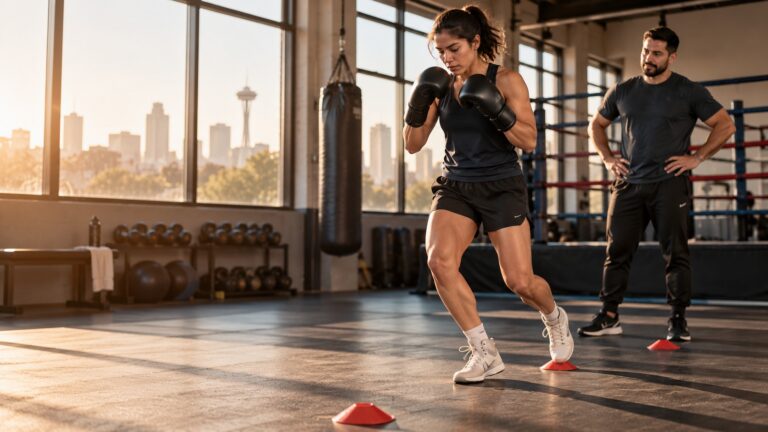
A quick coach-led stance test
Your coach may have you try each stance for a short period. From both sides, practice a jab, a
one-two, and small steps in four directions. The goal is not to decide which side produces the
hardest punch. Notice which stance lets you stay coordinated and follow cues without repeatedly
resetting your feet.
A gentle balance test can help: hold your guard while the coach gives the gloves or shoulders a
light, controlled touch. You should be able to absorb it without locking the knees or taking a large
step. This is a posture check, not a toughness test.
Should beginners switch stances?
Learning to switch can be useful later, but frequent switching creates extra decisions before the
fundamentals are stable. Your jab, rear straight, defensive reactions, and footwork all change
sides. Most beginners improve faster by choosing one primary stance and building reliable habits
there.
If both sides feel equally natural, ask the coach to choose a primary stance for the first several
weeks. You can revisit the decision after there is enough technique to compare. Changing once
for a clear reason is different from switching whenever a drill feels difficult.
What if you are left-handed?
A left-handed student often feels comfortable in southpaw, which places the left hand in the rear.
This can create different angles against the many orthodox boxers in most gyms. Those angles
are an advanced tactical benefit, not the main reason to choose the stance.
Start with balance and coachability. If your feet, eyes, and hands coordinate more naturally in
orthodox despite being left-handed, that is worth discussing. The goal is not to fit a label; it is to
build a dependable foundation.
Drills that make the stance automatic
- Freeze-and-check: move on the coach’s call, stop, and inspect foot width, knee softness,
guard, and balance. - Jab-and-reset: throw one jab, return the hand, and confirm that the feet did not change shape.
- One-two-and-hold: finish the rear straight and pause for one second without falling forward.
- Compass steps: move forward, back, left, and right while the nearest foot leads the direction.
- Bag-range drill: step close enough to reach the bag rather than leaning toward it.
Shoes, surface, and safety
Wear clean athletic or boxing shoes that match the academy’s rules and provide secure footing.
Avoid surfaces that are wet, cluttered, or excessively sticky. Turning the rear foot should not
force the knee to twist against the floor.
If you have ankle, knee, hip, or balance concerns, tell the coach before class. Stance dimensions
and movement can often be modified, but pain should not be ignored. Stop if you feel sharp pain,
instability, or dizziness.
What early progress looks like
During the first few weeks, success means that your feet return to the same shape after every
step and punch. You stop looking down as often. The jab comes back to guard, the rear heel
turns without spinning wildly, and you finish combinations balanced enough to defend.
Orthodox or southpaw is only the starting orientation. Good boxing comes from what you build
on top of it: posture, footwork, timing, defense, and calm repetition. Let the coach help you
choose, then give the stance enough consistent practice to become familiar.
Try a beginner-friendly Brazilian Jiu Jitsu class at San Antonio Grappling Academy. Our
coaches will help you learn at your pace, answer your questions, and give
you a clear path forward. Contact the academy today to schedule your first
class.