BJJ Soreness or Injury? A Beginner’s Guide to Training and Recovery
Learn what ordinary post-class soreness can feel like, which warning signs
deserve caution, and how to recover without losing your training momentum.
A little soreness can be part of starting Brazilian Jiu Jitsu. Your first classes ask your hips, core,
back, hands, and legs to work in unfamiliar ways, so it is normal to notice muscles that rarely
announce themselves in everyday life. What is not useful is assuming that every ache should be
ignored.
Learning the difference between ordinary training soreness and a possible injury helps beginners
stay consistent without becoming reckless. You do not need to diagnose yourself on the mat. You
only need a sensible decision process: notice what you feel, communicate early, reduce or stop
the activity when appropriate, and get qualified medical advice when symptoms call for it.
What normal post-training soreness often feels like
Delayed-onset muscle soreness, often called DOMS, usually feels like a broad tenderness or
stiffness in muscles that worked hard. It may be more noticeable the morning after class or
during the following day. Both sides of the body can feel tired, stairs may be less inviting, and the
first few minutes of movement may feel stiff before you loosen up.
The key pattern is gradual improvement. Ordinary soreness should become more manageable
rather than steadily more intense. Light movement is usually possible, even if it is not especially
graceful. A beginner might feel soreness in the forearms from gripping, the upper back from
pulling, or the hips from learning bridges and shrimping. The exact response varies by person
and session.
Soreness is information, not a badge of honor. A productive class
does not have to make you miserable the next day.
Warning signs that deserve more caution
Pain that is sharp, sudden, highly localized, or connected to a specific twist, fall, or impact
deserves a different response. Stop the movement and tell the coach. Do not test the area
repeatedly just to see whether it still hurts.
Other warning signs include a joint that feels unstable, major or increasing swelling, a loss of
normal movement, numbness or tingling, significant weakness, or pain that makes ordinary
walking or daily tasks difficult. Headache, confusion, dizziness, vision changes, neck pain, or
unusual drowsiness after a head impact require prompt attention and should never be treated as
routine toughness.
This article offers general training guidance, not a medical diagnosis. If you are uncertain,
symptoms are severe, or they are getting worse, pause training and seek advice from a qualified
health professional. Emergency symptoms require urgent care.
What to do when something feels wrong in class
First, stop. Tap if you are in a live exchange, create space safely, and tell your partner and coach
what happened. Clear language works best: ‘I felt a sharp pain on the outside of my knee when
we turned,’ is more useful than, ‘It is probably nothing.’ Your coach can end the drill, help you
avoid further load, and explain the academy’s next steps.
Do not let embarrassment keep you in the round. Good training partners would rather reset early
than turn a small problem into a larger one. Sitting out one drill protects many future sessions. If
you feel faint, dizzy, disoriented, unusually short of breath, or have chest pain, stop immediately
and alert the coach.
Discomfort is not the same as pain
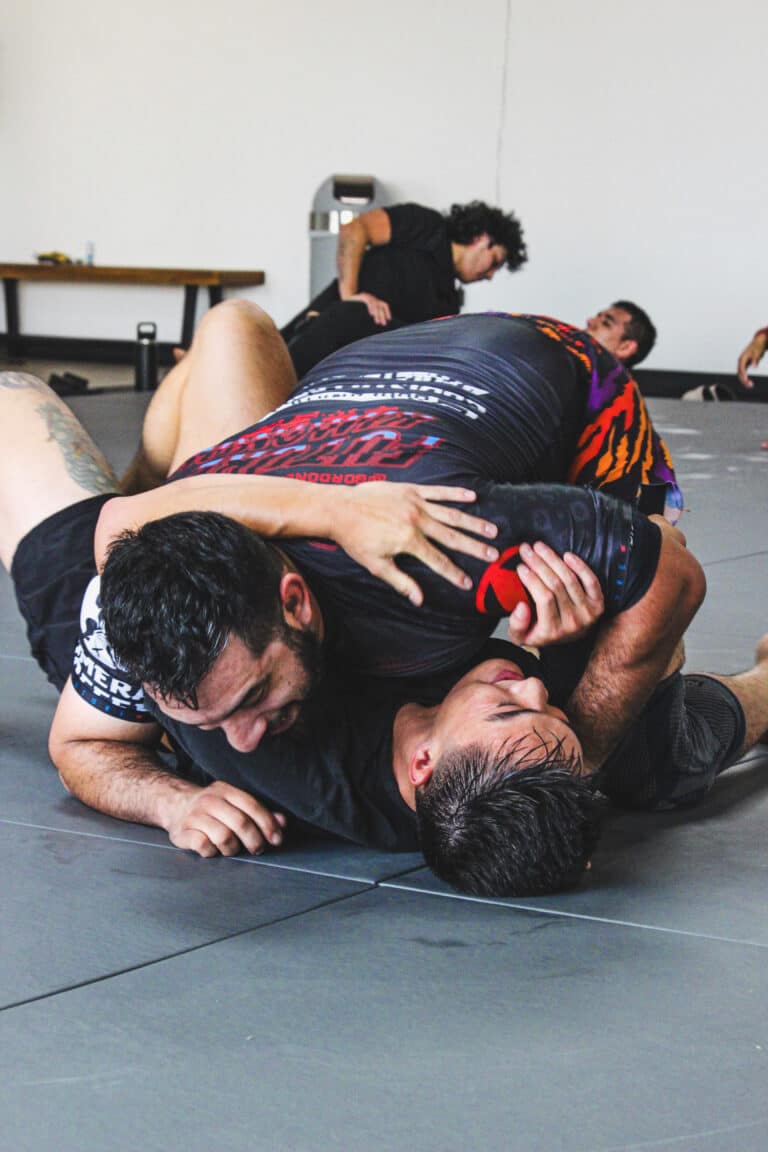
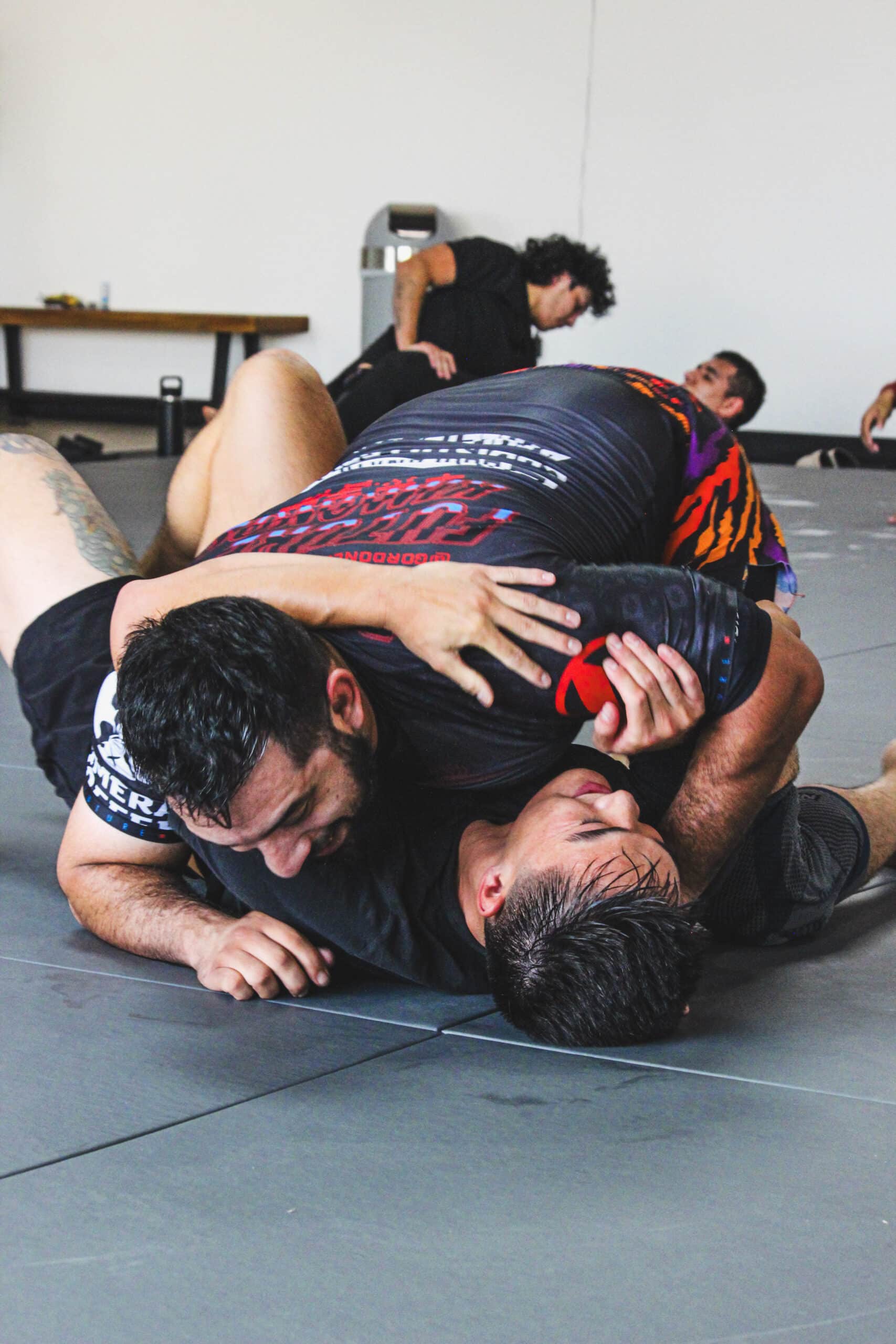
BJJ includes pressure, effort, and positions that may be unfamiliar. A tight side-control position
can feel uncomfortable without being injurious. The goal is not to panic at every difficult
sensation, but beginners should never be expected to distinguish every risk while trapped under
pressure.
Tap whenever you feel unsafe, experience pain, cannot protect yourself, or simply need the
exchange to stop. You do not owe your partner an explanation before tapping. Afterward, ask the
coach what created the discomfort and how to recognize the position earlier next time.
How to communicate before a round
Tell your partner about any limitation that affects the round, and be specific about what you
need. For example: ‘My right shoulder is improving, but please do not pull it behind my back.’
The safest choice may be to avoid live rounds or that position entirely. A limitation is not a
challenge for your partner to work around at full speed.
- Choose controlled partners and agree on the pace before starting.
- Tap early, especially when you are still learning where joint locks become dangerous.
- Release immediately when a partner taps—by hand, foot, or voice.
- Ask the coach for a modification instead of inventing one under pressure.
Recovery basics that actually help
Recovery does not need to be complicated. Protect your sleep, eat regular meals with enough
protein and carbohydrates for your needs, drink water throughout the day, and use easy
movement to keep from becoming excessively stiff. A comfortable walk or gentle mobility work
can feel better than staying completely still.
Avoid using pain-relieving medication simply to hide symptoms and train through a problem
without medical guidance. Ice, heat, stretching, massage, and other recovery tools may feel
helpful for some people, but none of them replaces an appropriate evaluation when injury signs
are present.
Should you train when you are sore?
If soreness is mild, improving, and does not change how you move, you may be able to attend
and train at a reduced intensity. Tell the coach before class, warm up gradually, and give yourself
permission to drill without live rounds. If your movement is altered, soreness is unusually strong,
or fatigue makes you sloppy, a recovery day may be the better training decision.
Beginners commonly do well with two classes per week separated by recovery days. That
schedule provides enough repetition to learn while your body adapts. Add another class only
when soreness is manageable, energy is steady, and your enthusiasm remains high.
Returning after an injury or longer break
A return should be gradual and guided by the medical advice you received. Being cleared for
activity does not always mean jumping straight into unrestricted rounds. Start with the warm-up
and technical drilling, then add controlled positional work before full training. Share the plan with
the coach and choose partners who will respect it.
Measure success by how well your body responds over the next day or two, not by how much you
survived in one class. If symptoms return or worsen, step back and get reassessed. Patience here
protects the consistency that produces long-term progress.
A simple beginner decision checklist
- Broad muscle stiffness that is improving: move gently, recover, and consider a lighter session.
- Sharp, sudden, worsening, or joint-centered pain: stop and inform the coach.
- Swelling, instability, numbness, weakness, or loss of function: pause training and seek
qualified care. - Any concerning symptoms after a head or neck impact: stop and obtain prompt medical
guidance.
Not sure which category fits: choose caution and ask for help.
The strongest beginners are not the ones who ignore every signal. They are the ones who learn
to train with awareness, communicate without ego, and return consistently. Taking care of your
body is part of learning Brazilian Jiu Jitsu—not a detour from it.
Try a beginner-friendly Brazilian Jiu Jitsu class at San Antonio Grappling Academy. Our
coaches will help you learn at your pace, answer your questions, and give
you a clear path forward. Contact the academy today to schedule your first
class.