Boxing Gloves and Hand
Wraps: A Beginner’s Buying
and Care Guide
How to choose the right training gloves, wrap your hands safely, avoid common
buying mistakes, and make your equipment last.
Buying boxing equipment can feel harder than taking the first class. Gloves come in different
weights, hand wraps come in several lengths, and product descriptions often assume you already
know what you need. The good news is that a beginner’s setup can be simple: properly fitted
wraps, appropriate training gloves, and guidance from the academy before you spend heavily.
Equipment supports good training, but it does not replace coaching or technique. The right gear
should protect your hands, fit securely, and match the type of work you are doing.
Ask the academy before buying
Gyms may have rules about glove size, color, closure type, or what can be used for partner drills.
Some provide loaner gloves for a first class. Ask what the beginner program uses and whether
you should wait until a coach can check your fit.
This prevents two common mistakes: buying small bag gloves that are not appropriate for class,
or buying expensive specialty gear before you know your preferences. A basic, reliable pair is
enough to begin.
Glove weight is not the same as hand size. Fit, padding, intended
use, and academy rules all matter.
What glove weights mean
Boxing gloves are commonly labeled by ounces, such as 10 oz, 12 oz, 14 oz, or 16 oz. The
number primarily describes glove weight and usually corresponds with differences in padding
and construction. It does not directly tell you whether the hand compartment will fit.
Many adult fitness and general training classes use 12 to 16 oz gloves, but the correct choice
depends on body size, workout type, coach preference, and whether partner contact is involved.
Sparring gloves often require more padding and a gym-approved weight. Never assume a glove
is suitable for sparring because it looks large.
Training gloves, bag gloves, and sparring gloves
General training gloves
These versatile gloves are designed for common class activities such as mitts and heavy-bag
rounds. They are often the best first purchase because a beginner can use one pair for most
non-sparring work.
Bag gloves
Bag-specific gloves may be lighter or firmer and are built for striking equipment. Some offer
excellent feedback, but they may not have the padding or design a coach wants for partner drills.
Use them only for their intended purpose.
Sparring gloves
Sparring gloves are selected with partner safety in mind and should be approved by the coach.
Padding condition matters. Old, compacted gloves that feel fine to the wearer may be unsafe for
a partner.
How boxing gloves should fit
Try gloves with hand wraps on. Your fingertips should sit naturally without painfully pressing into
the end, and your thumb should rest comfortably in its attached compartment. The glove should
feel secure around the hand and wrist without numbness or circulation loss.
Make a relaxed fist. The knuckles should align with the striking surface, and the wrist should not
collapse easily from side to side. Excess interior space can let the hand slide; a glove that is too
tight can create pressure points. Brands fit differently, so a coach’s in-person check is valuable.
Velcro or lace-up?
Hook-and-loop closures are convenient for everyday classes because students can usually put
them on and remove them without assistance. A wide wrist strap can provide useful support
when fitted correctly. Keep the hook surface covered so it does not scratch partners or
equipment.
Lace-up gloves can provide a close, adjustable fit but require another person or specialized
converters to secure them. They are common in competition and serious sparring settings, but
most beginners find Velcro more practical.
Why hand wraps matter
Hand wraps help organize the small bones of the hand, support the wrist, protect the knuckles,
and manage sweat inside the glove. They do not make poor punching mechanics safe, but they
add an important layer of support.
Traditional cloth wraps are inexpensive and washable. Many adults use wraps around 180 inches
long because they provide enough material for the wrist, knuckles, and fingers, though smaller
hands or youth students may need a different length. Quick wraps are convenient but may
provide a different level of support and should be approved by the coach.
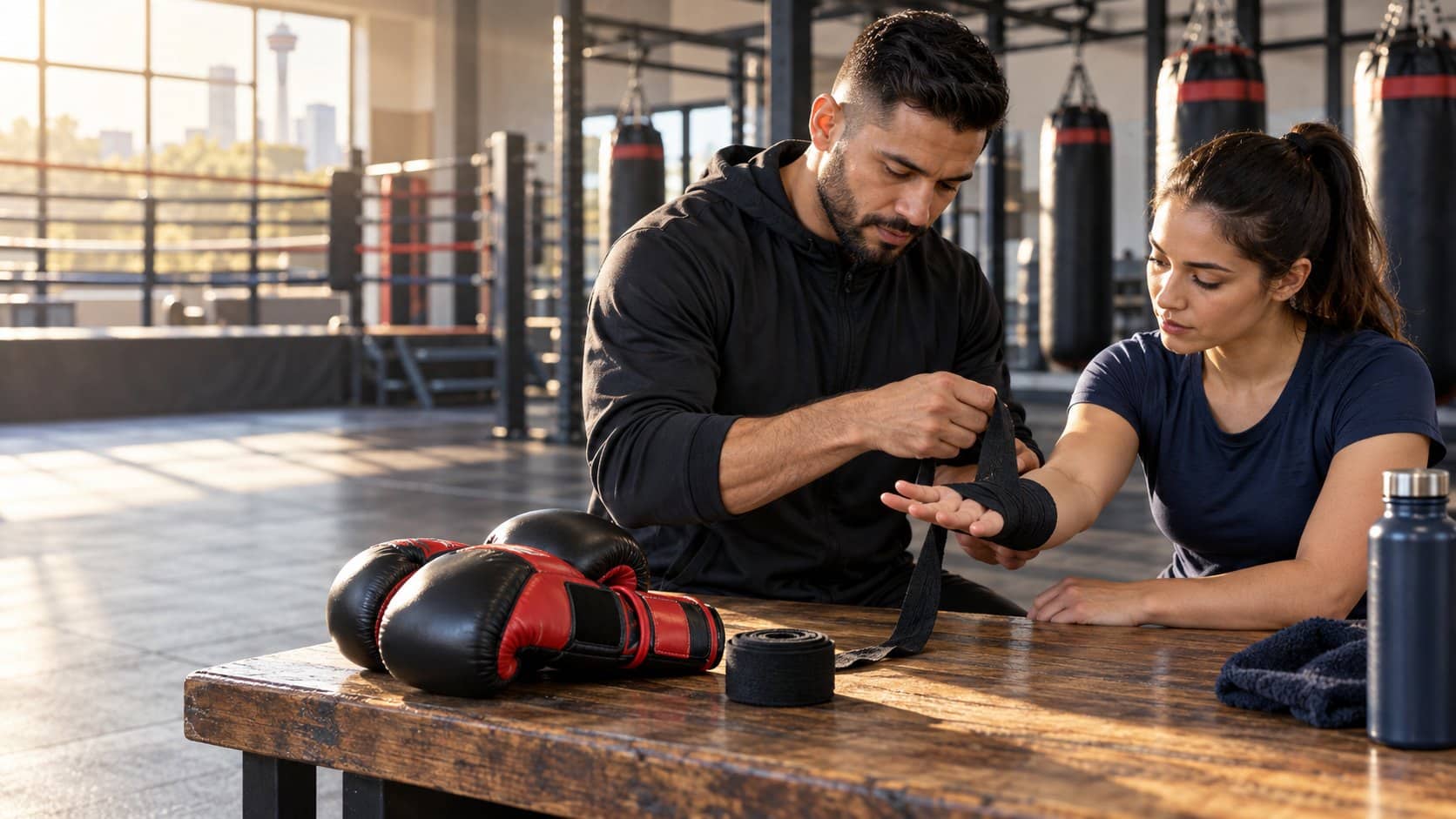
A safe wrapping approach
Wrapping styles vary. A coach may teach a sequence around the wrist, thumb, knuckles, and
spaces between the fingers. Follow that method rather than copying a random complicated
pattern. The wrap should lie flat, cover the important areas, and finish securely.
The wrap should feel supportive, not painfully tight. After wrapping, open and close your hand. If
fingers tingle, change color, become cold, or feel numb, remove the wrap and start again with
less tension. Wrinkles and twisted fabric can create pressure spots inside the glove.
Common beginner equipment mistakes
- Choosing gloves only by color, price, or an online size chart without checking academy
requirements. - Hitting the heavy bag barehanded or with only thin wraps.
- Using damaged gloves with flattened padding, torn lining, or weak wrist closure.
- Wrapping so tightly that circulation is reduced.
- Leaving wet wraps and gloves sealed in a gym bag after class.
Care that makes equipment last
Remove gloves and wraps from your bag after every session. Open the gloves fully and let them
air-dry in a ventilated area away from direct high heat. Follow the manufacturer’s cleaning
instructions; soaking gloves or using harsh chemicals can damage padding and materials.
Wash cloth wraps after each use and let them dry completely. A mesh laundry bag can keep long
wraps from tangling. Rotate between two or more clean pairs if you train frequently. Wipe your
gear bag regularly and never lend damp equipment to another student.
When to replace gloves
Replace gloves when padding becomes noticeably compacted or uneven, the striking surface
cracks, interior material bunches, the thumb attachment tears, or the closure no longer stabilizes
the wrist. Persistent odor after proper cleaning and drying can also signal that it is time.
Have a coach inspect questionable gear, especially before any partner drill. Equipment that
appears usable for bag work may no longer be suitable for contact.
Your simple first purchase
For most new students, the sensible starting kit is one academy-approved pair of general training
gloves, two pairs of washable cloth hand wraps, a breathable gear bag, and a water bottle. Add
specialized gloves or protective equipment only when your training requires them.
Buy for fit and purpose, not for image. When your hands feel secure and your equipment
matches the class, you can stop thinking about gear and focus on the skills that matter: balanced
feet, straight punches, a reliable guard, and controlled practice.
Try a beginner-friendly boxing class at San Antonio Grappling Academy. Our
coaches will help you learn at your pace, answer your questions, and give
you a clear path forward. Contact the academy today to schedule your first
class.