Do You Need to Get in Shape Before Starting BJJ?
Why sport-specific fitness develops through training, how to pace your first
weeks, and what real beginner progress looks like.
One of the most common reasons people postpone Brazilian Jiu Jitsu is the belief that they should
get in shape first. It sounds sensible: train alone for a few months, improve cardio, lose some
weight, then walk into the academy feeling prepared. The problem is that general fitness cannot
fully prepare you for a sport you have not learned yet.
You do not need to be fit before you begin BJJ. You need a beginner-friendly class, permission to
work at an appropriate pace, and the willingness to learn. Training itself can then help you
develop the specific endurance, coordination, and confidence the sport requires.
Why almost everyone feels tired at first
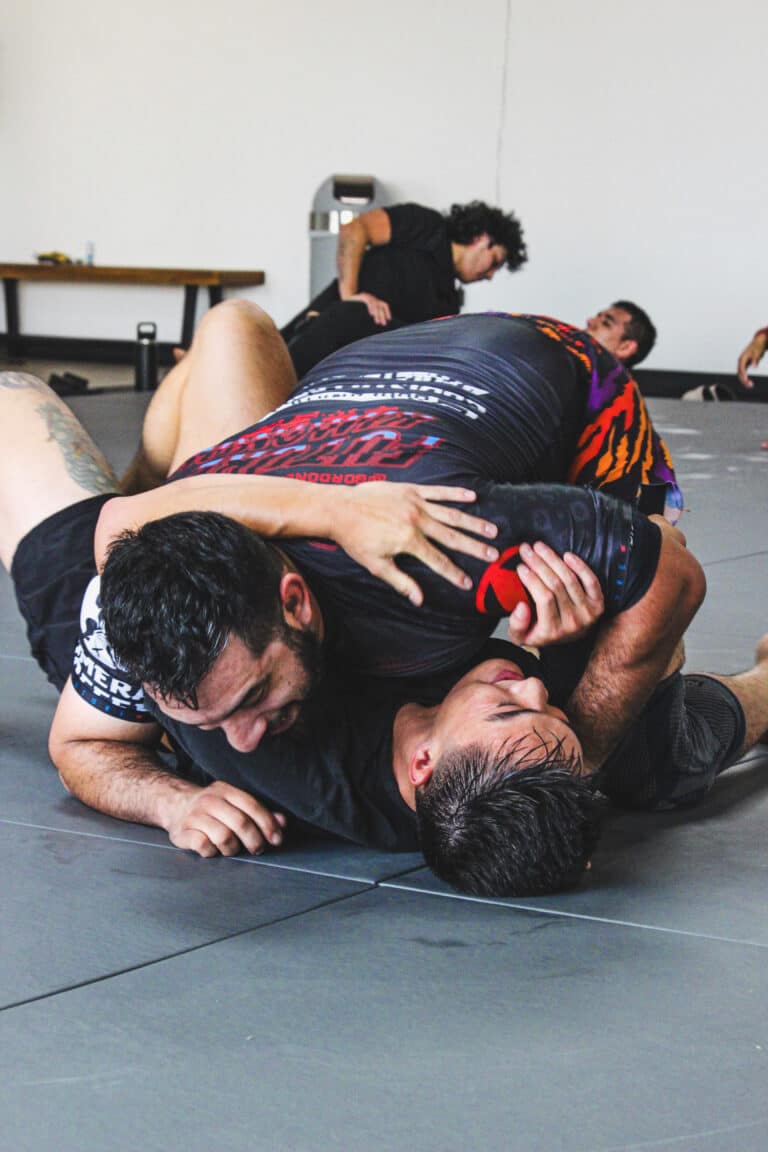
A new student may be strong from lifting or have excellent running endurance and still become
tired quickly on the mat. BJJ combines unfamiliar movement, problem-solving, gripping, pressure,
and close contact. Beginners also tense muscles that do not need to be tense and hold their
breath when a position feels uncertain.
Experienced students often look calmer because they recognize positions and know when effort
is useful. They build frames instead of pushing everywhere, use their skeleton to carry pressure,
and breathe while waiting for an opening. Much of what appears to be superior cardio is actually
better efficiency.
Getting tired in your first classes is not proof that you are unfit for
BJJ. It is part of learning how to move efficiently.
What a beginner-friendly starting pace looks like
Tell the coach that you are new and mention any injuries or health concerns before class. During
warm-ups, move at a pace that lets you follow directions. When drilling, prioritize accuracy over
speed. During live practice, use controlled effort and ask whether positional rounds or a lighter
partner would be appropriate.
You should expect your breathing to increase and your muscles to work, but you should not feel
pressured to match the fastest person in the room. Stop and alert the coach if you experience
chest pain, faintness, unusual shortness of breath, or sharp pain. Anyone with a medical
condition or a long period of inactivity may benefit from discussing exercise with a qualified
healthcare professional.
Fitness qualities BJJ develops
Work capacity
Rounds alternate between movement, isometric holds, and short bursts of effort. Over time,
regular training can improve your ability to work, recover briefly, and work again. The change
often appears first as better composure: you can finish a round while still making decisions.
Whole-body strength
BJJ asks the legs, hips, core, back, and hands to coordinate. You learn to create tension when
needed and relax when it is not. Technique remains the priority, but consistent practice gives the
body repeated resistance in many angles.
Mobility and body awareness
Hip movement, posture, balance, and transitions help students become more aware of where
their limbs are and how their weight is distributed. Range of motion varies, and no student
should force a joint to copy someone else’s position. Coaches can offer modifications.
Mental endurance
Staying calm under pressure is a skill. Each time you breathe, identify the position, and choose a
sensible next step, you practice responding instead of panicking. That mental steadiness is one
reason beginners often report confidence gains beyond the mat.
A realistic first four weeks
Two classes per week is a strong starting point for many adults. It provides enough repetition to
remember the room and basic positions while leaving time for recovery. If your schedule
supports only one class at first, start with one. A repeatable plan is better than an intense burst
followed by a long absence.
- Week one: learn the class structure, how to tap, and how to communicate with partners.
- Week two: notice your breathing and relax your grip whenever maximum tension is
unnecessary. - Week three: identify a few major positions and one safe action from each.
- Week four: compare your composure and recovery with your first class, not with another
student.
How to pace a round without giving up
Pacing does not mean lying still and hoping the round ends. It means choosing purposeful effort.
If you are pinned, establish safe frames and turn toward a productive angle before exploding. If
you are on top, maintain posture and balance instead of squeezing every muscle. Exhale during
effort and let your jaw and shoulders relax.
Use a simple internal check: Can I breathe? Am I safe? What position am I in? What is one useful
next step? This turns a chaotic exchange into a sequence of manageable decisions.
Body size is not an admission requirement
BJJ academies include students with different heights, weights, ages, and athletic backgrounds.
Larger students may need to learn how to apply pressure with control; smaller students may rely
more heavily on angles and frames. Every body brings advantages, constraints, and a learning
curve.
You do not have to lose weight before you deserve instruction. Wear properly fitted training
clothes, communicate with the coach, and work with partners selected for a productive
experience. If a movement needs modification, that is a coaching problem to solve, not a reason
you do not belong.
Should you do extra conditioning?
Extra exercise can support BJJ, but it should not become another barrier to entry. Begin with the
classes themselves and basic recovery: sleep, hydration, regular meals, and light movement on
off days. Once your body adjusts, one or two simple strength sessions can help resilience if they
fit your schedule.
Walking, cycling, or swimming at a comfortable pace can improve general aerobic fitness.
Strength training built around controlled pushing, pulling, hinging, squatting, carrying, and core
stability can be useful. Keep the program modest enough that you arrive at class able to learn.
What progress feels like before it looks impressive
Early progress may be recovering your breath faster between rounds, remembering to tap
without hesitation, or getting through the warm-up without rushing. You may notice that your
hands are less exhausted because you stopped gripping everything. Perhaps a difficult position
no longer feels like an emergency.
These changes matter. Technical skill and fitness develop together, and both are easier to notice
across months than across individual days. Keep a small record of attendance, energy, and one
lesson from each class so gradual improvement becomes visible.
The best way to get ready is to begin
You can prepare for your first class by hydrating, eating normally, trimming your nails, bringing
clean gear, and arriving early. You cannot prepare by becoming immune to being a beginner.
Everyone starts without the sport-specific timing and efficiency that make BJJ feel manageable.
Start at your current fitness level, let the coach scale the experience, and give yourself several
weeks to adapt. You do not earn the right to train by getting in shape first. Training is one of the
ways you build that fitness.
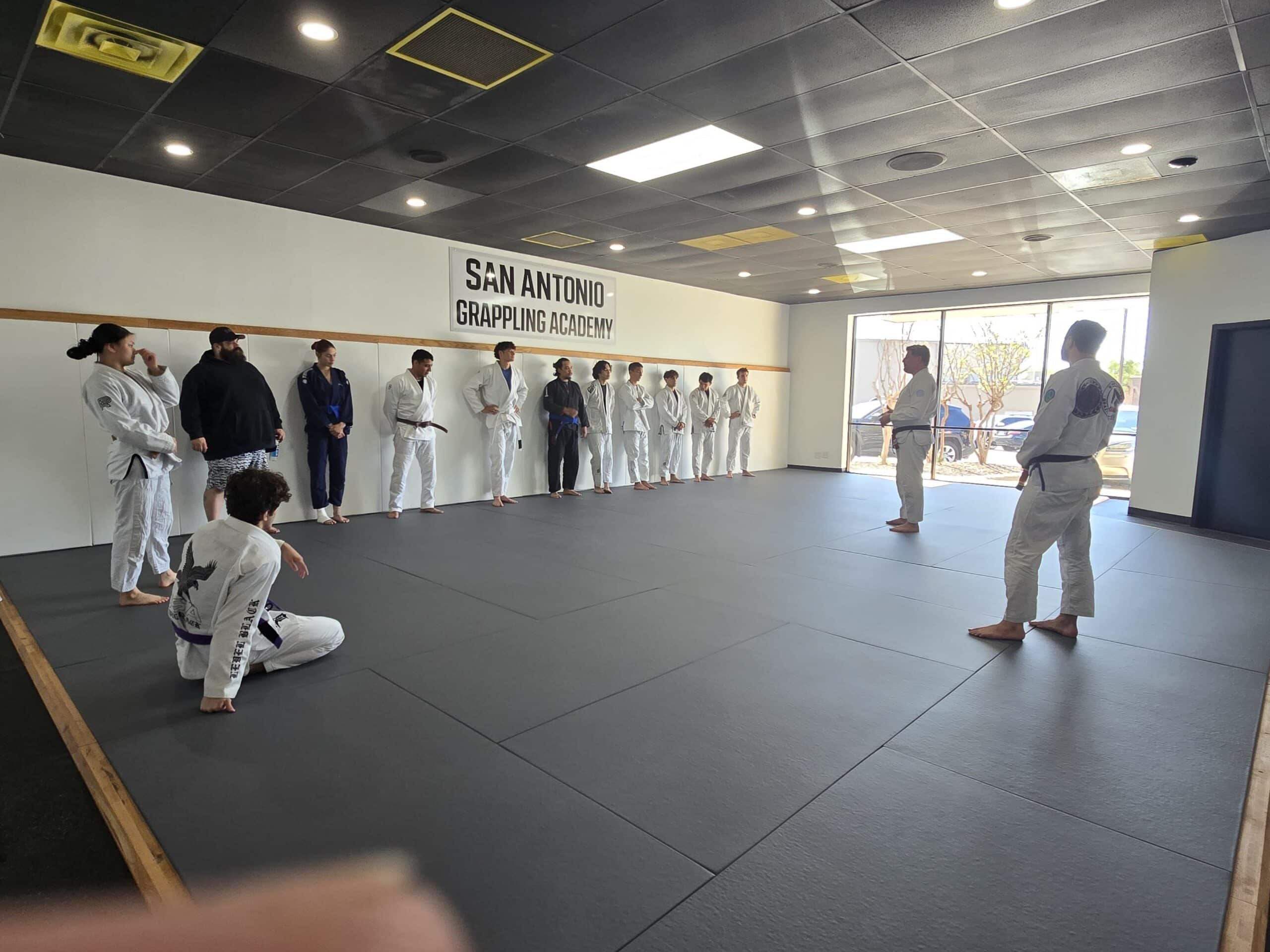
Try a beginner-friendly boxing class at San Antonio Grappling Academy. Our
coaches will help you learn at your pace, answer your questions, and give
you a clear path forward. Contact the academy today to schedule your first
class.