How Beginners Learn Boxing Defense Before Sparring
You can build real defensive skill, awareness, and confidence through stance, footwork, guard work, and controlled drills – without being thrown into live contact.
Many people are drawn to boxing because they want better fitness, sharper confidence, and
practical skills. Then they hesitate because they imagine the first class means getting hit. At a
well-run beginner program, it should not. New boxers can build a meaningful foundation through
stance, footwork, defense drills, pads, and bag work long before live sparring enters the
conversation.
That slower path is not avoiding real boxing. It is how you learn to see punches, stay balanced,
and respond calmly. Defense begins as a set of repeatable movements, not as a test of
toughness.
What beginner defense actually means
Defense is often pictured as dramatic slipping and weaving. Those skills matter, but the beginner
foundation is simpler: stand in a position that protects you, keep your eyes on the person in front
of you, return your hands to guard, and move without crossing your feet. Good defense starts
before a punch is thrown.
A stable stance gives you the option to block, step, pivot, or answer with a controlled counter. If
your feet are too narrow, too square, or tangled, even the correct hand movement may not save
your balance. That is why a coach may spend more time adjusting your feet than teaching flashy
combinations.
You do not need to prove you can take a punch. You need to learn
how not to be available for one.
Your first layer: stance and guard
A basic boxing stance usually places the feet about shoulder-width apart with one foot slightly
behind the other. Knees stay soft, weight remains balanced, and the rear heel is ready to turn.
Your chin is gently tucked, hands are positioned to protect your face, and elbows stay near the
body.
The exact stance varies with body type and coaching style, so avoid forcing yourself into a
picture-perfect pose. The test is functional: can you step in any direction, throw a straight punch,
and return to a protected position without falling forward?
A simple guard checklist
- Look forward through your eyebrows instead of dropping your gaze toward the floor.
- Keep the chin down without curling your entire posture forward.
- Let the shoulders stay relaxed enough to move; tension makes reactions slower.
- Bring each hand home after punching instead of admiring the shot
Your second layer: feet that keep you safe
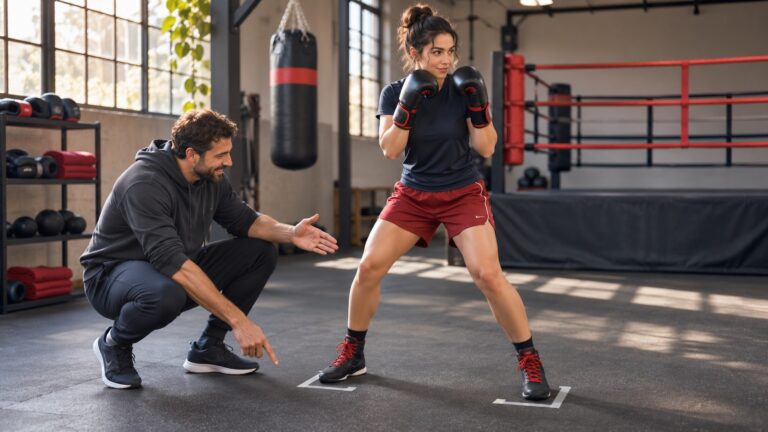
Before learning complex head movement, practice small, balanced steps. When moving forward,
the lead foot initiates and the rear foot follows. When moving backward, the rear foot initiates.
Moving left or right follows the same principle: the foot nearest that direction moves first. This
helps preserve the width and shape of your stance.
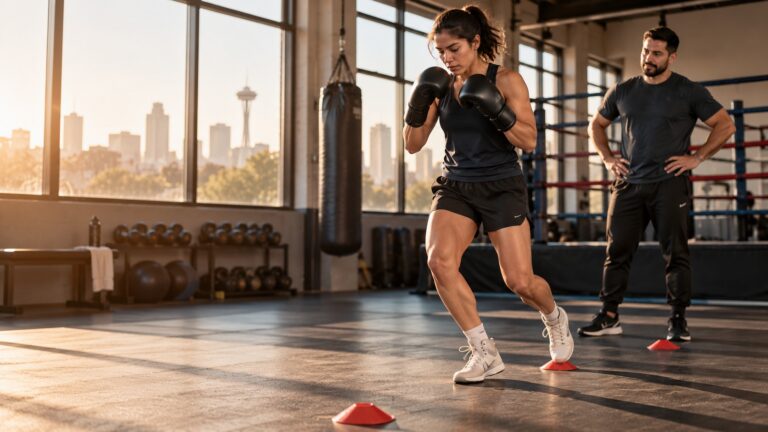
Beginners often take steps that are too large. Large steps create moments when the feet are
close together or the weight is stranded on one leg. Short steps may feel less athletic, but they
let you change direction and defend sooner. Shadowboxing along a floor line is an excellent
low-impact way to build this habit.
Your third layer: the high guard and catch
The high guard is an accessible answer when a straight punch is coming toward your head.
Instead of reaching far away, keep your hand near your face and receive the punch on the glove
while maintaining structure. Coaches often call this catching the jab. The movement is compact
because every extra inch creates an opening.
You can learn the catch with a partner who extends slow, predictable jabs without impact. The
defender sees the shoulder and glove move, catches gently, and resets. This is cooperative skill
practice, not a contest. Speed increases only when both people can remain accurate and relaxed.
Your fourth layer: parries and blocks
A parry redirects a straight punch with a small touch. The key word is small. Swatting across your
body may move one punch but exposes you to the next. A compact parry keeps your guard close
and your feet ready.
Hooks to the head and body introduce different blocks. A coach may teach you to bring the glove
to the side of the head, keep the elbow positioned correctly, or close the elbow toward the ribs.
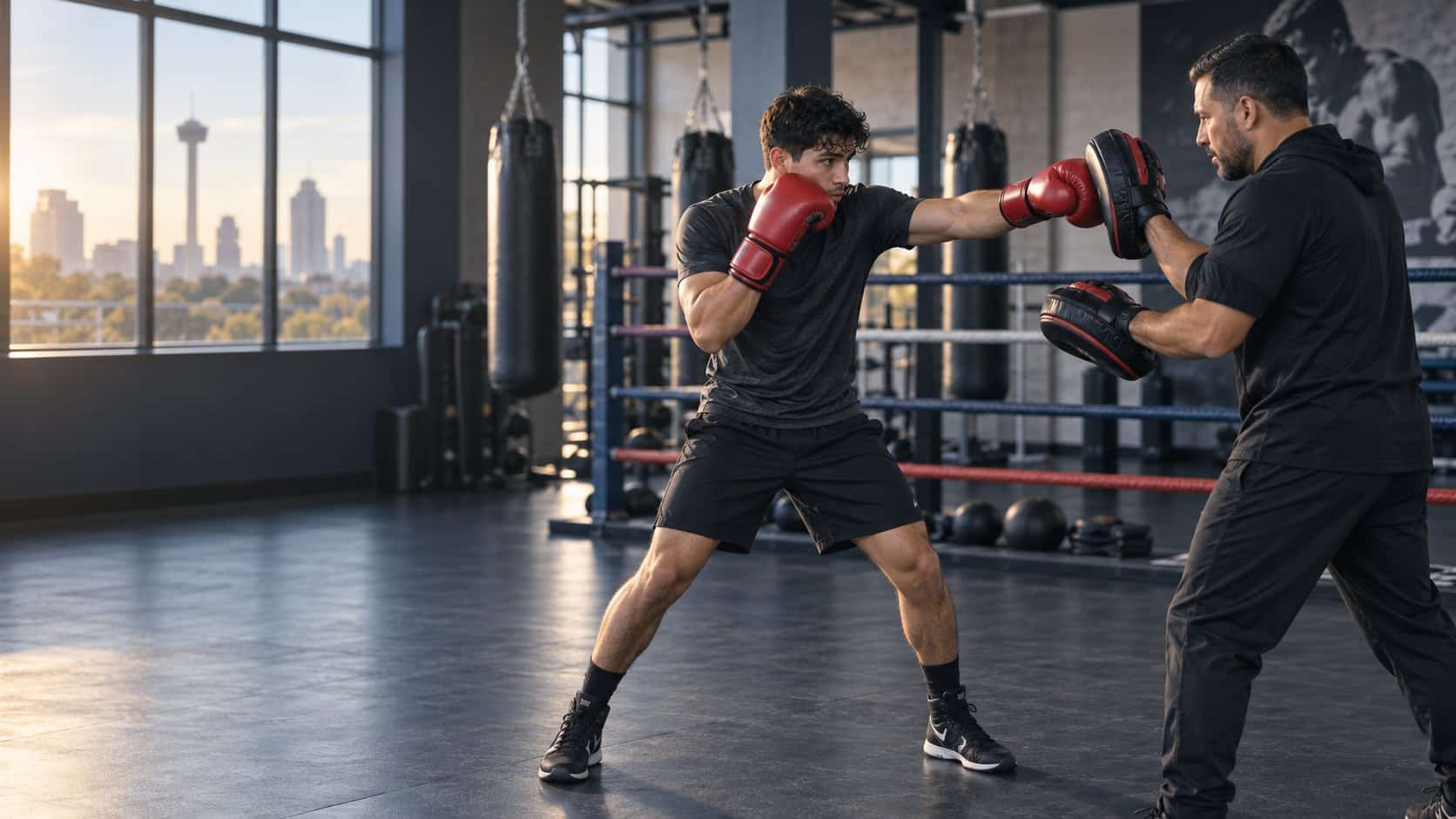
These movements should be drilled slowly on focus mitts or with touch-only partner cues before
they are tested at higher speed.
Your fifth layer: moving the target
Once stance and guard are dependable, you can add slips, pullbacks, pivots, and rolls. A slip
moves the head just outside the line of a straight punch while keeping the body ready to answer.
The goal is not a huge bend. Excessive movement takes time, costs balance, and may carry your
head into another punch.
Start with a coach or partner holding a pool noodle, slip line, or glove as a visual cue. Move at a
pace where you can keep your eyes up and your feet under you. If you lose sight of the cue or
have to scramble back into stance, reduce the range and speed.
A safe progression before sparring
Sparring is one training method, not the definition of boxing. A responsible progression builds
control and understanding first.
- Solo practice: stance checks, step-and-reset drills, shadowboxing, and defensive movement in
a mirror. - Coach-led tools: focus mitts, double-end bag, slip rope, and heavy-bag rounds with a defensive
exit after each combination. - Cooperative partner drills: one known attack and one known defense at low speed.
- Restricted drills: limited punch choices, light contact, and a specific goal under close
supervision. - Optional sparring: introduced only when the coach and student agree that skill, control,
equipment, and readiness are in place.
You should always know the purpose and expected intensity of a drill before it starts. Ask
questions. Tell the coach about injuries, vision issues, medications, or previous concussions that
may affect participation, and consult a qualified medical professional when appropriate. No gym
culture should pressure a beginner to hide concerns.
How offense teaches defense
Every punch should finish with recovery. Throw a jab, bring it back to guard, and step out at an
angle. Throw a one-two, then imagine the return fire and block or move. Adding a defensive
action after every bag combination teaches you that a successful punch is not the end of the
exchange.
This habit also improves confidence because you stop feeling frozen after attacking. You begin to
understand boxing as a conversation: establish position, send a message, expect an answer, and
leave safely.
Equipment for beginner defensive training
For most entry-level classes, comfortable athletic clothing, supportive shoes if the gym permits
them, hand wraps, and properly fitted boxing gloves are the essentials. The academy can tell you
what glove size is appropriate and whether loaner equipment is available. A mouthguard and
approved protective equipment become important for drills involving contact.
Do not buy specialized headgear solely because you assume sparring starts immediately. Ask the
coach about the program first. Equipment does not replace instruction, controlled partners,
sensible intensity, or a thoughtful training plan.
What early progress feels like
After several weeks, you may notice that your hands return to your face automatically, your
steps become quieter, and you can finish a bag combination without falling forward. During
partner drills, you begin seeing the first punch rather than flinching at every movement. These
small changes are the building blocks of composure.
Confidence in boxing is not the belief that nothing can hurt you. It is trust in your preparation,
awareness, and ability to make a useful decision under pressure. That trust grows through
controlled repetitions. Start slowly, focus on position, and let speed arrive after the movement is
dependable.
Ready to take the first step?
Try a beginner-friendly boxing class at San Antonio Grappling Academy. Our
coaches will help you learn at your pace, answer your questions, and give
you a clear path forward. Contact the academy today to schedule your first
class.