How to Build a Reliable Jab: A Beginner Boxing Guide
Stance, hand path, footwork, recovery, common mistakes, and a simple practice
sequence for boxing’s most important punch.
The jab is often the first punch a beginner learns and the one experienced boxers continue
refining for years. It can measure distance, interrupt an opponent’s rhythm, create an opening,
protect your movement, and begin almost every combination. A reliable jab is not simply a fast
lead hand; it is a coordinated action that starts from balance and ends back in a safe position.
Beginners improve fastest when they treat the jab as a complete skill: stance, path, contact,
recovery, and footwork. Power comes later
Begin with a stance you can return to
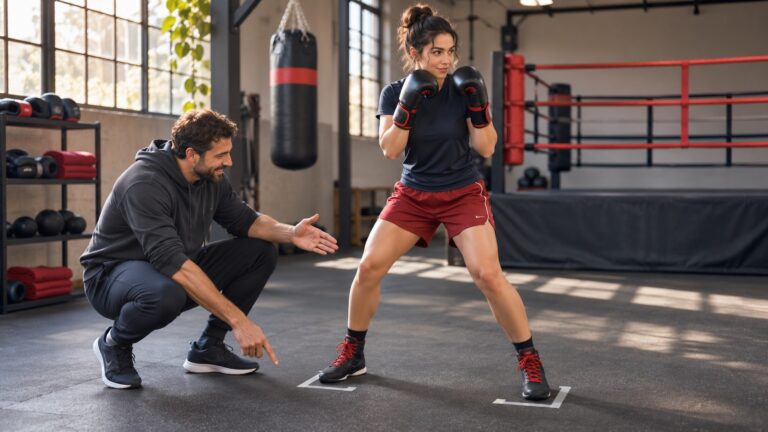
Stand in the boxing stance your coach teaches, with the lead foot slightly ahead, knees relaxed,
chin gently tucked, and hands protecting the face. Your weight should be balanced enough to
step in any direction without first reorganizing your feet.
The jab travels from the lead side. Before punching, check that the lead shoulder is not pulled far
behind the body and that the elbow is not flared outward. A comfortable starting position allows
a short, direct path.
A good jab finishes with you balanced, protected, and ready to
move or punch again.
The shortest path is usually the best path
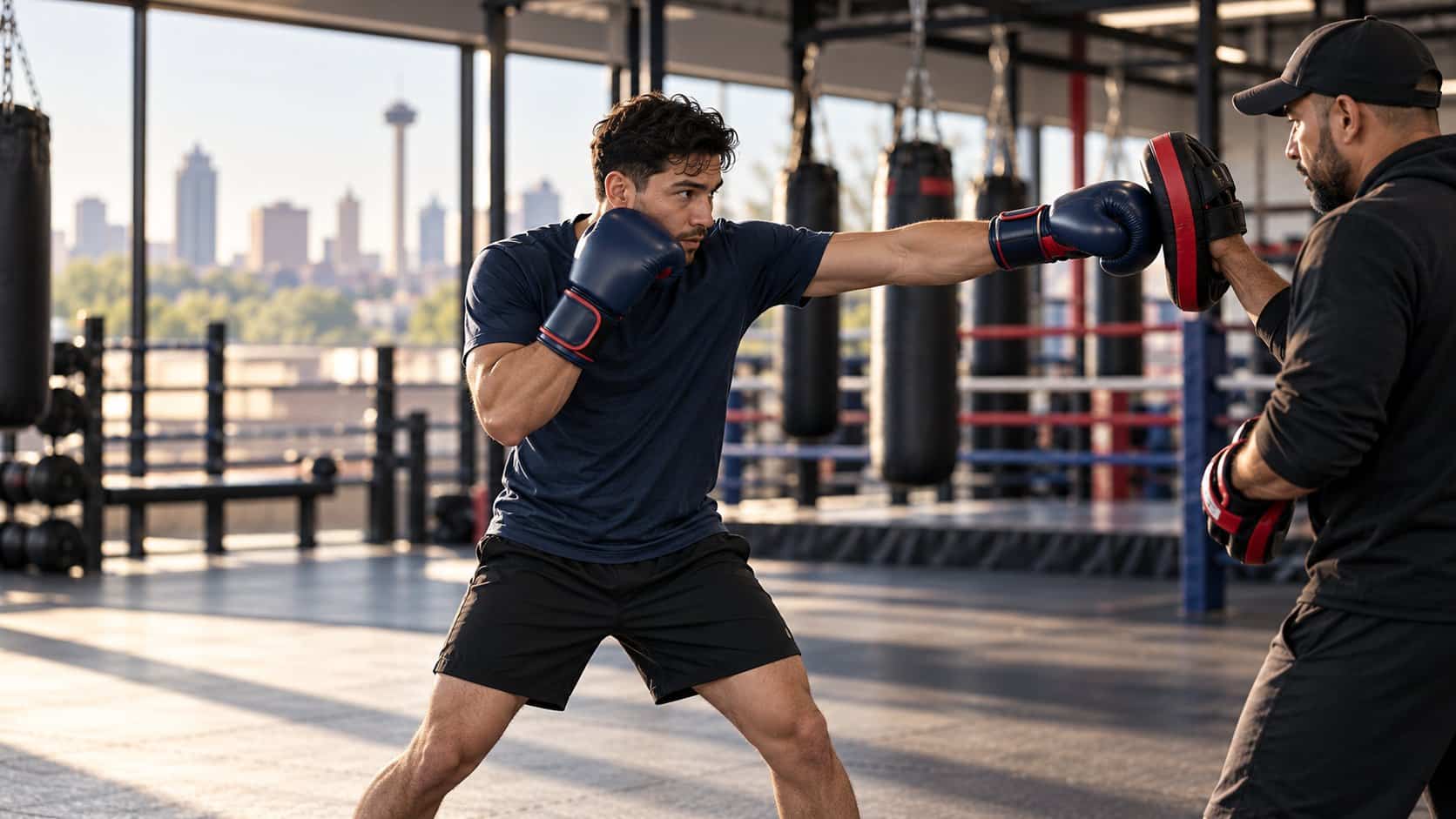
Send the lead fist straight toward the target. Avoid dropping the hand first, circling the elbow
widely, or pulling the glove backward to load up. Those extra motions make the jab easier to see
and slower to recover.
As the arm extends, the lead shoulder can rise to help protect the chin. The rear hand stays
home. Do not reach so far that the chest falls past the front knee or the rear heel loses useful
contact with the floor.
Make a fist without creating unnecessary tension
Keep the hand relaxed enough to move, then close it firmly as the punch reaches the target.
Strike with the padded knuckle area of the glove while keeping the wrist aligned with the
forearm. A bent wrist transfers force poorly and can cause injury.
Hand wraps and properly fitted gloves support the hand but do not correct poor alignment. Start
with controlled contact on mitts or a bag and ask the coach to check the wrist and striking
surface.
Breathe with the punch
Use a short exhale as the jab leaves. Holding your breath creates tension and makes
combinations exhausting. The exhale does not need to be loud; it is a timing cue that helps the
body remain organized.
After the punch, continue breathing normally. Beginners sometimes freeze at full extension while
admiring the target. A jab is not complete until it has returned.
Bring the hand home on the same line
Recover the lead hand directly to guard. Letting it fall after contact creates an opening and slows
the next action. Think of the return as part of the punch, not the cleanup afterward.
The return should be quick but not tense. When shadowboxing, pause after each jab and check:
lead hand home, rear hand home, chin protected, feet still underneath you.
The jab and your feet
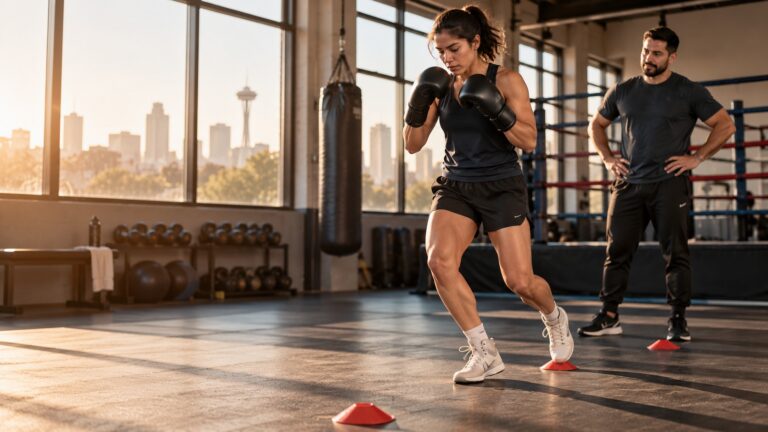
A stationary jab teaches the hand path, but boxing happens through distance. To jab while
moving forward, the lead foot usually initiates a small step as the punch travels, and the rear foot
follows to restore the stance. Your coach may adjust the timing based on the drill.
Keep the step short. Lunging may make the punch reach farther, but it leaves the body unable to
defend or change direction. If the target remains out of range, move the stance closer rather
than stretching the arm beyond balance.
Five jobs the jab can perform
- Measure: learn whether the target is inside punching range.
- Score: land a clean, controlled straight punch.
- Set up: draw attention before the cross, hook, or body attack.
- Disrupt: interrupt forward movement or an opponent’s timing.
- Exit: occupy the line while stepping away or changing angle.
The mechanics may look similar, but the intention changes. A range-finding jab can be light; a
scoring jab is more committed; a defensive jab may accompany movement. Beginners should
build one clean version before chasing every variation.
Common beginner mistakes:
Reaching with the head
If the face moves forward before the fist, you close distance without protection. Keep the head
over a stable base and let the feet solve range.
Dropping the rear hand
The rear glove often drifts when the lead arm extends. Keep it near the cheek and use a mirror or
coach’s mitt cue to catch the habit.
Pushing instead of snapping
Leaving the fist on the bag turns the jab into a shove and slows recovery. Touch the target
cleanly and return. The heavy bag should not need to swing dramatically for the repetition to
count.
Trying to punch hard too soon
Maximum effort creates tension and hides alignment errors. Begin at a level where you can
repeat the same path and finish balanced.
A simple jab practice sequence
- Round one: shadowbox single jabs, pausing to check stance and guard after each repetition.
- Round two: jab a focus mitt at low speed while the coach adjusts range and alignment.
- Round three: jab the heavy bag with moderate contact, returning the glove immediately.
- Round four: add a small forward step, then reset the feet before the next jab.
- Round five: jab and exit with a step or pivot assigned by the coach
Use short rounds and stop when technique deteriorates. Ten accurate repetitions teach more
than fifty rushed ones
How to practice safely with a partner
Partner drills should have a clear target, speed, and contact level. One student may present a
glove while the other practices range, or feed a predictable movement for a jab-and-exit drill.
This is cooperative learning, not surprise sparring.
Wear the equipment the academy requires, control every punch, and stop immediately if your
partner asks. Live sparring should occur only when the coach decides the student is prepared
and everyone understands the intensity.
What progress looks like
Your jab is improving when it no longer pulls you out of stance, the rear hand stays home, the
wrist lands straight, and the glove returns automatically. You begin to recognize range before
throwing and can jab while moving without crossing your feet.
Do not judge the jab only by power. Accuracy, timing, recovery, and the ability to repeat it under
fatigue matter more. A sharp jab is built from thousands of calm, correct decisions.
Build the punch that builds everything else
A dependable jab makes combinations easier because it organizes the distance and gives the
rest of your offense a starting point. It also teaches core boxing habits: balance, straight lines,
breathing, defense, and recovery.
Start slowly, let a coach adjust the details, and make every repetition finish in stance. The jab
may be the first punch you learn, but it can remain the center of your boxing for as long as you
train
Try a beginner-friendly boxing class at San Antonio Grappling Academy. Our
coaches will help you learn at your pace, answer your questions, and give
you a clear path forward. Contact the academy today to schedule your first
class.