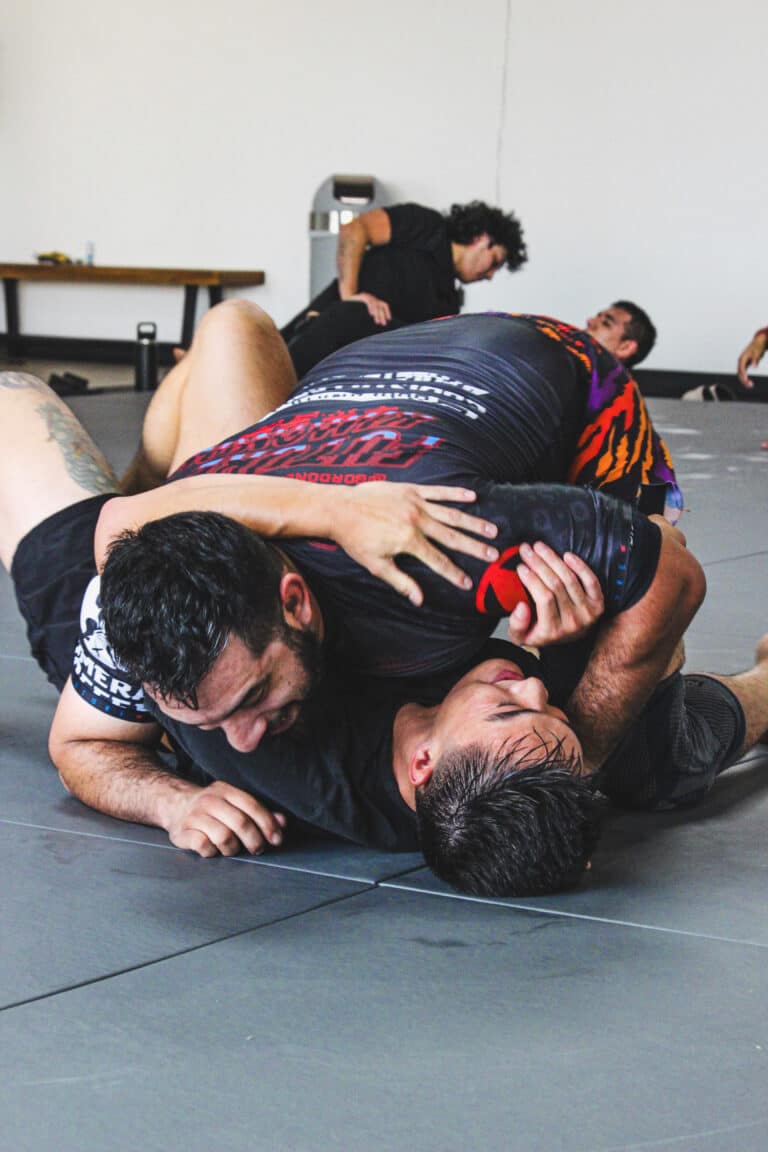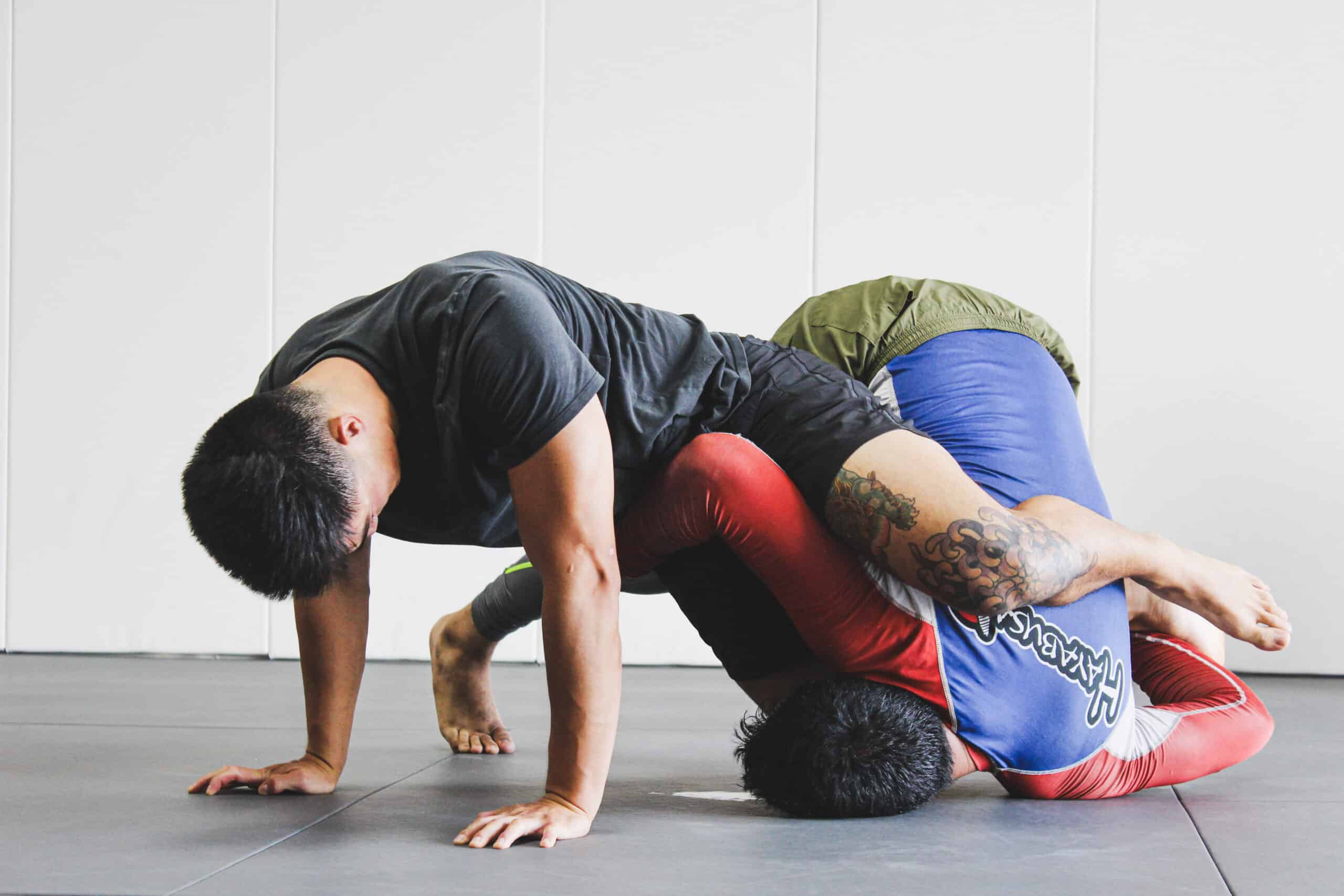
Tapping in BJJ: The Beginner
Skill That Keeps Everyone
Safe
When to tap, how to signal clearly, what your partner must do, and why tapping
is an essential part of learning – not a failure.
Tapping is one of the first skills every Brazilian Jiu Jitsu student learns, yet beginners often
misunderstand what it means. From the outside, tapping can look like losing. Inside a healthy
academy, it is something far more useful: a clear safety signal, a form of communication, and the
reset button that lets both partners keep learning.
You are expected to tap in training. Black belts tap. Coaches tap. Competitors tap. The goal of an
ordinary class is not to prove that you can tolerate pain; it is to practice positions with enough
control that everyone can return tomorrow.
What tapping means
A tap means stop immediately and release the position. It can signal that a submission is
secured, that pressure is unsafe, that something hurts, or simply that the student is
uncomfortable and needs the exchange to end. Your training partner does not need to decide
whether your reason is good enough.
After the release, both students reset in the way the coach has instructed. You may restart the
round, return to the beginning of a positional drill, or pause to clarify what happened. The tap
ends the exchange, not the relationship and not your progress.
Tap early enough that your partner can release before pain
becomes injury. Training is where you learn, not where you
gamble with your joints.
How to tap clearly
The most common method is tapping your partner two or three times with an open hand. Tap a
part of their body they can feel, such as the shoulder, arm, back, or leg. If your hands are
trapped, tap the mat loudly with your hand or foot.
You can also say ‘tap’ loudly and clearly. Verbal tapping is especially important when you cannot
move a limb, when your partner cannot see your hand, or when a choking position makes delay
risky. Do not whisper or wait for eye contact. Use whatever safe signal is available.
Three habits for an unmistakable tap
- Tap more than once so a single contact is not mistaken for normal movement.
- Use your voice immediately if your hands or feet cannot reach safely.
- Keep signaling until you feel the hold release, then stop moving and reset calmly.
When should a beginner tap?
Tap when you recognize that a joint lock or choke is secured, before you feel sharp pain or begin
to panic. You are not required to wait until the final possible second. Early in training, you may
not know exactly how close a position is to becoming dangerous, so choosing the safer moment
is part of good judgment.
Tap if a finger, toe, knee, shoulder, neck, or other body part is caught in an awkward way, even if
no formal submission is being attempted. Tap if you feel dizzy, cannot breathe normally, or
become overwhelmed. Then tell your partner and coach what you felt before resuming.
Why pain is a poor measuring tool
Some submissions create strong discomfort before injury; others can damage a joint with little
warning. Chokes may reduce blood flow without feeling like the air-hungry sensation beginners
expect. Waiting for intense pain is therefore not a reliable safety strategy.
Learn the position and the direction of pressure. As soon as your partner has control and you no
longer have a safe, technical response, tapping is sensible. With experience, your recognition
improves and you learn which escapes belong earlier in the sequence.
Tapping to chokes
A properly applied choke may become effective quickly. Do not treat staying conscious as a
toughness test. If the position is locked and your escape is not immediately working, tap. If you
feel lightheaded, confused, or unusually weak, stop training and alert the coach.
Partners applying chokes should increase pressure gradually in ordinary training and release the
instant a tap is felt or heard. If a partner becomes unresponsive, the hold must be released
immediately and the coach summoned.
Tapping to joint locks
Arm locks, shoulder locks, leg locks, and wrist locks create leverage against joints with limited
ranges of motion. Beginners should not twist, jerk, or explode out of a tight joint lock. Tap while
the position is controlled, before the joint reaches its limit.
The person applying the lock also has responsibility. Secure the position, apply pressure slowly,
and give the partner time to respond. Catch-and-release control is a sign of skill. A submission
that injures a teammate is not a training success.
The partner’s responsibility after a tap
Release immediately – not after one more adjustment and not after deciding the hold was loose.
If you are unsure whether you felt a tap, release and ask. Protecting a training partner matters
more than finishing the technique.
Do not celebrate, criticize, or lecture. Reset with respect. If the tap happened because of
accidental pressure, tangled clothing, or an awkward limb, make the necessary adjustment. If
either person is hurt or uncertain, involve the coach.
What if someone does not respect the tap?
Stop training with that person and tell the coach immediately. A missed signal can happen once
in a noisy room, which is why clear verbal and physical tapping matters. Ignoring a recognized
tap, repeatedly applying submissions too quickly, or pressuring someone to continue is
unacceptable.
You are always allowed to decline a round or end one early. A healthy academy will support that
boundary and address unsafe behavior rather than treating it as part of being tough.
Tapping is how you learn faster
When beginners refuse to tap, their attention narrows to survival and their movements become
desperate. Tapping resets the situation and gives them another chance to recognize the setup
earlier. Over time, they learn that the real mistake often happened several steps before the
submission.
Ask one short question after an appropriate moment: ‘Where did I lose the position?’ or ‘What
should I protect earlier?’ The answer may be posture, elbow position, inside control, or allowing a
grip. That information is more valuable than extending a lost exchange for five dangerous
seconds.
A beginner safety checklist
- Agree on the drill and expected intensity before starting.
- Move with control and avoid sudden twisting or uncontrolled falling.
- Tap with your hand, foot, or voice as soon as you need the exchange to stop.
- Release immediately when your partner taps or verbally signals.
- Tell the coach about injuries, dizziness, unsafe behavior, or anything you do not understand.
The mindset that keeps you training
A tap is not a verdict on your ability. It is one data point in a practice session. You may tap many
times in a class and leave with a better understanding of frames, posture, and submission
awareness than you had when you arrived.
The students who progress are not the ones who never tap. They are the ones who protect
themselves, protect their partners, pay attention to the lesson, and keep returning. Learn to tap
clearly, respect every tap immediately, and you will have one of the most important foundations
in BJJ.
Try a beginner-friendly boxing class at San Antonio Grappling Academy. Our
coaches will help you learn at your pace, answer your questions, and give
you a clear path forward. Contact the academy today to schedule your first
class.