Why Decision-Making Is Becoming the
Most Important Skill in Brazilian Jiu Jitsu
Brazilian Jiu Jitsu has always rewarded technical precision.
For years, students focused on learning more techniques, memorizing longer sequences, and
adding increasingly complex guards to their arsenal. While technical knowledge still matters,
one trend has become impossible to ignore in 2026:
The best grapplers aren’t winning because they know more moves.
They’re winning because they make better decisions.
As professional organizations continue to showcase faster-paced matches, athletes are
succeeding by recognizing opportunities sooner, transitioning more efficiently, and staying one
step ahead during scrambles.
The Information Era of Jiu Jitsu
Never before has so much instruction been available.
Students can watch:
● Competition footage
● Online instructionals
● Match breakdowns
● Training clips
● Daily technique videos
Learning techniques has never been easier.
Applying them under pressure is another story.
The difference between intermediate and advanced practitioners is often not how many
techniques they know, but how quickly they recognize the correct response.
Every Position Is a Decision Tree
A common mistake is viewing Jiu Jitsu as a collection of isolated techniques.
In reality, every position creates a series of choices.
When your opponent stands in your guard:
● Sweep?
● Enter a leg entanglement?
● Stand up?
● Off-balance them?
● Transition to another guard?
There isn’t always one correct answer.
The best practitioners simply recognize the highest-percentage option faster than everyone
else.
Why Scrambles Matter More Than Ever
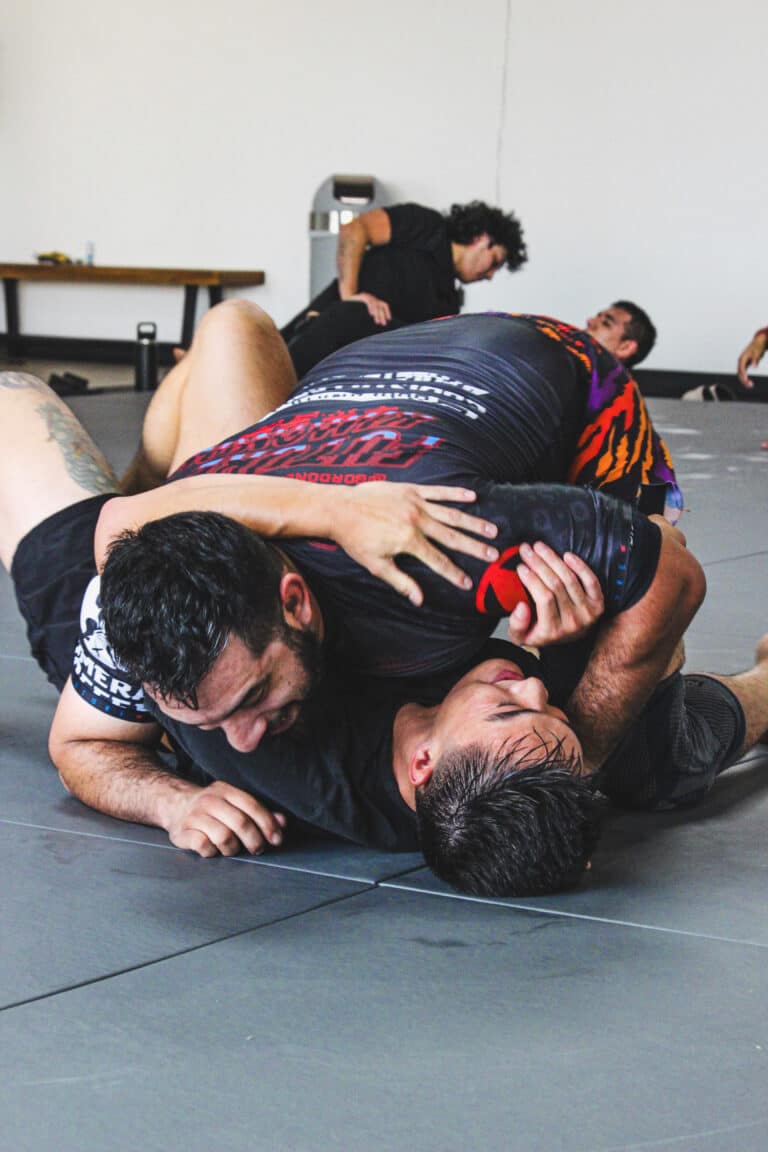
Modern No-Gi competition has become increasingly dynamic.
Wrestling exchanges, transitions, and prolonged scrambles now decide many matches at the
highest level, making quick decision-making just as valuable as technical ability.
The athletes who remain calm during chaos consistently find dominant positions while others
hesitate.
Slow Training Creates Fast Thinking
Ironically, becoming faster often starts by slowing down.
Instead of rushing through techniques:
● Pause between transitions.
● Ask why each grip matters.
● Understand your opponent’s likely reactions.
● Learn what options disappear after every movement.
Over time, thoughtful repetitions become automatic reactions.
Drilling With Purpose
Rather than performing hundreds of identical repetitions, many coaches are incorporating
“constraint-based” training.
Instead of memorizing sequences, students solve problems with limited options, encouraging
creativity and better decision-making.
Examples include:
● Starting from disadvantageous positions.
● Limiting available grips.
● Focusing on one objective during a round.
These drills help build adaptable grapplers instead of predictable ones.
What Hobbyists Can Learn
You don’t need to compete to benefit from this approach.
During your next training session, try asking yourself:
● What is my opponent trying to accomplish?
● What reaction am I trying to create?
● If my first attack fails, what comes next?
These simple questions develop awareness that carries into every aspect of your game.
Final Thoughts
Brazilian Jiu Jitsu will continue evolving.
New guards will appear.
New submissions will emerge.
New rulesets will influence strategy.
But one skill will always separate good grapplers from great ones:
The ability to consistently make better decisions under pressure.
Learn techniques.
Study the latest trends.
But spend just as much time improving how you think on the mats.
Because in modern Jiu Jitsu, the fastest mind often beats the fastest athlete.
Ready to improve more than just your technique? Join us on the mats and learn how to think,
adapt, and thrive in every position. Whether you’re a complete beginner or an experienced
grappler, our classes focus on building smart, confident Jiu Jitsu that works under pressure.
Come train with us and experience the difference.