Your First Boxing Class: What
to Bring, What to Expect, and
How to Succeed
A no-surprises guide to the warm-up, fundamentals, equipment, intensity, and
etiquette that help new boxers feel at home.
A first boxing class can look intimidating from the outside: gloves snapping against pads, jump
ropes moving quickly, and combinations called out in numbers. Inside a beginner-friendly class,
the experience is much more approachable. You should be introduced to stance, movement,
basic punches, and gym routines at a pace designed for learning.
You do not need previous experience, exceptional conditioning, or a willingness to spar. Your first
job is simply to listen, move with control, and learn the shape of the class.
What usually happens when you arrive
Plan to arrive ten to fifteen minutes early. This gives you time to sign in, meet the coach, explain
any injuries, and learn where to place your belongings. The coach may ask about your
experience and goals – fitness, confidence, skill development, competition, or a mix. An honest
answer helps them guide you.
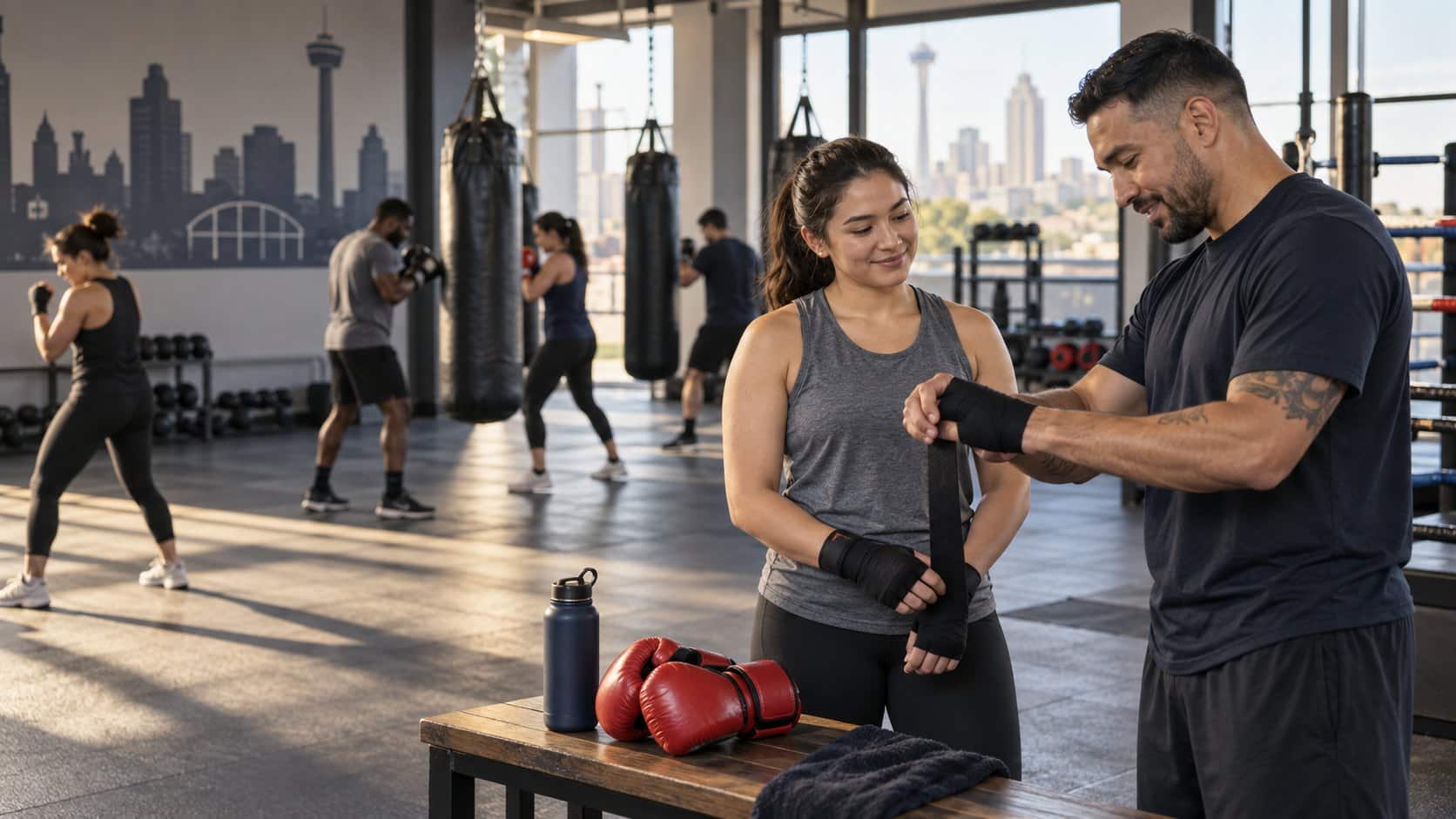
If you are unsure how to wrap your hands, ask. Hand wrapping is a learned skill, and most
beginners need several demonstrations. A coach can also confirm whether your gloves fit and
whether the class uses boxing shoes, clean indoor athletic shoes, or another footwear policy.
Your first class is an introduction, not a fitness test and not a
fight.
The warm-up: prepare, do not prove
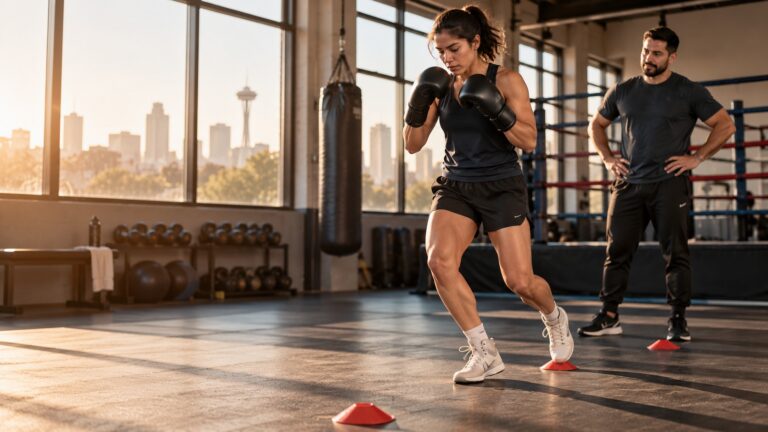
Warm-ups vary, but may include light jogging, jump rope, dynamic movement, bodyweight
exercises, or relaxed shadowboxing. The goal is to raise your temperature and prepare the joints
and movement patterns used in class.
If the jump rope catches every few seconds, you are still doing fine. Reset and continue, or use a
low-impact alternative suggested by the coach. Pace yourself early. Beginners often start the
warm-up too hard, then struggle to concentrate when technique instruction begins.
Choose three orientation points
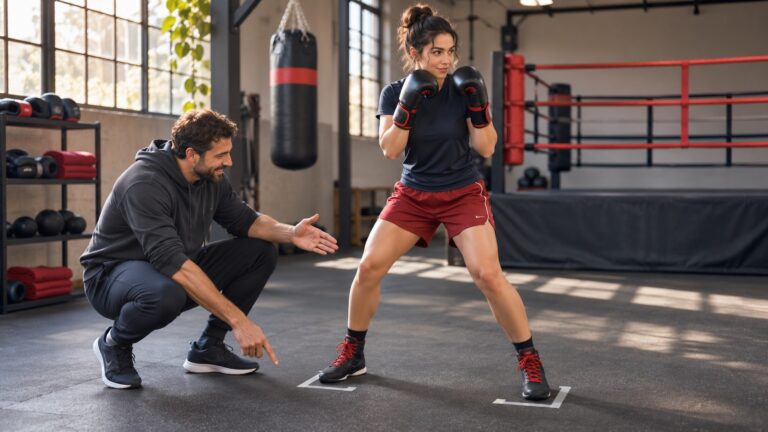
Before throwing combinations, you need a position that lets you punch, defend, and move. The
coach will help place your feet, soften your knees, tuck your chin, and organize your guard. Small
adjustments can feel awkward because your body is learning a new map.
Expect to practice stepping forward, backward, and sideways without crossing your feet. This
may look simple, but balanced footwork is what allows every later punch to work. Treat it as a
core skill, not filler before the exciting part.
The basic punches you may learn
Many introductory classes begin with the jab and cross. The jab travels from the lead hand and
helps establish range; the cross comes from the rear hand with coordinated rotation through the
floor, hips, and shoulders. You may also be introduced to hooks or uppercuts, depending on the
lesson.
Coaches often use numbers as shorthand: one may mean jab, two may mean cross, and later
numbers represent other punches. Systems differ, so listen to your coach rather than
memorizing a chart from the internet.
Three beginner priorities
- Balance: finish each punch able to move again.
- Return: bring the punching hand back to guard instead of leaving it extended.
- Breathing: exhale briefly with effort and avoid holding your breath through a combination.
Pads, bags, and partner drills
On focus mitts, a coach or partner presents targets for specific punches. Accuracy and rhythm
matter more than power. Listen for the combination, touch the center of the target, and reset
your stance. If you miss, do not lunge after the mitt; return to position and try again.
Heavy-bag work lets you practice without a target moving away. Start with controlled punches.
Hitting as hard as possible before your wrists, shoulders, and mechanics are ready can cause
injury and usually makes technique worse. Partner drills should be clearly explained and scaled
for beginners. They may involve mirroring footwork or presenting gloves as targets, not hitting
each other.
Will you get hit or have to spar?
A beginner fitness or fundamentals class should not surprise you with live sparring. Sparring is a
separate, coached activity that requires readiness, control, appropriate equipment, and informed
participation. Ask how the academy structures contact training if you are uncertain.
It is reasonable to say that you are not ready for contact. You can learn valuable boxing through
shadowboxing, mitts, bags, defense drills, conditioning, and cooperative partner work. If your
long-term goal includes sparring, the fundamentals you build first will make that experience safer
and more productive.
What to bring
- Comfortable athletic clothes that stay secure during movement.
- A full water bottle and small towel.
- Hand wraps and boxing gloves if you own them; ask about loaners before buying.
- Clean indoor athletic shoes or boxing shoes according to the academy’s policy.
- Any information the coach should know about injuries, medical limitations, or prior
concussions.
For gloves, the best size depends on your body, class purpose, and gym rules. Do not assume the
cheapest or heaviest pair is automatically right. A coach can steer you toward suitable padding,
wrist support, and fit. Your fingers should sit naturally and your wrist should feel supported
without numbness.
How hard will the workout be?
Boxing uses the legs, hips, core, shoulders, and attention at the same time, so even basic drills
can feel demanding. You may tire faster than expected because tension and unfamiliar
coordination consume energy. That does not mean you are too out of shape to start.
Work at a pace that lets you maintain technique. Take water when directed, tell the coach if you
feel dizzy or experience sharp pain, and use lower-impact options when appropriate. Normal
effort can include elevated breathing and muscle fatigue; concerning symptoms should never be
hidden to keep up with the room.
Beginner etiquette that makes class smoother
Listen while the coach demonstrates, keep your equipment contained, and give training partners
enough space. Do not strike bags someone else is using or walk through active mitt work. When
paired with another beginner, communicate about pace and take turns fairly.
Clean wraps and clothing matter. Let gloves dry fully after class instead of sealing them in a bag.
If you borrow academy equipment, return it where directed and follow the cleaning procedure.
What success looks like after one class
Success is not throwing a perfect combination. It may be learning which foot belongs in front,
completing a few balanced jabs, understanding how to make a fist inside the glove, or noticing
that the class felt welcoming. You will forget some details; that is expected.
Before leaving, ask one useful question and find out which class to attend next. Write down a
single cue that helped you – perhaps ‘hands home,’ ‘small steps,’ or ‘breathe.’ Returning with one
familiar idea is how the gym starts to feel less foreign.
A calm way to prepare
Eat a normal meal with enough time to digest, hydrate throughout the day, and avoid exhausting
yourself with an extra workout beforehand. Pack the night before and arrive early. Most
importantly, release the idea that everyone will be judging you. Experienced boxers are usually
focused on their own practice, and every person in the room once had a first class.
Boxing confidence grows from doing unfamiliar things in manageable steps. Your first class is
exactly that: one coached step, a few basic skills, and the beginning of a routine you can build.
Ready to take the first step?
Try a beginner-friendly boxing class at San Antonio Grappling Academy. Our
coaches will help you learn at your pace, answer your questions, and give
you a clear path forward. Contact the academy today to schedule your first
class.